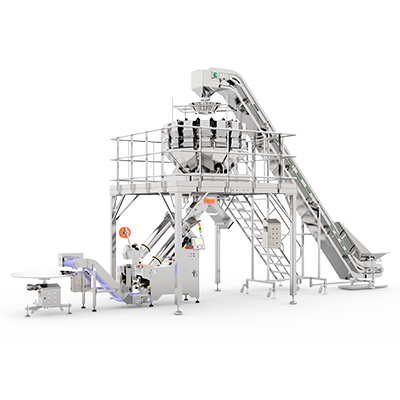
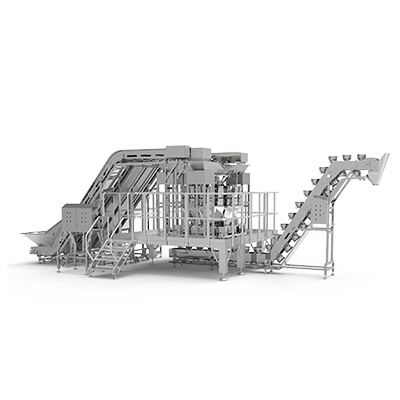
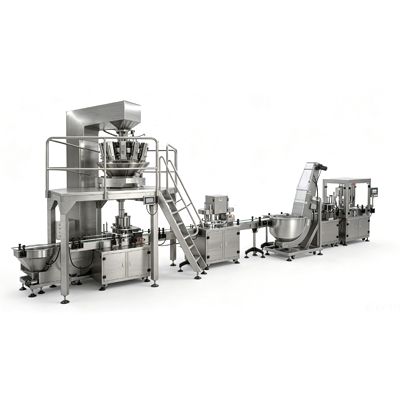
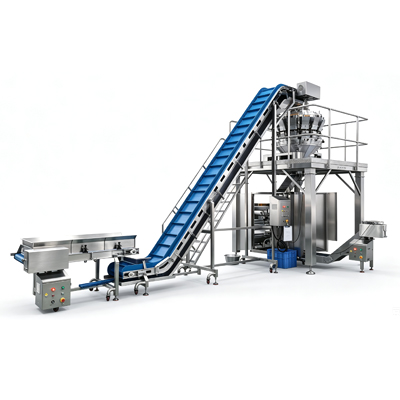
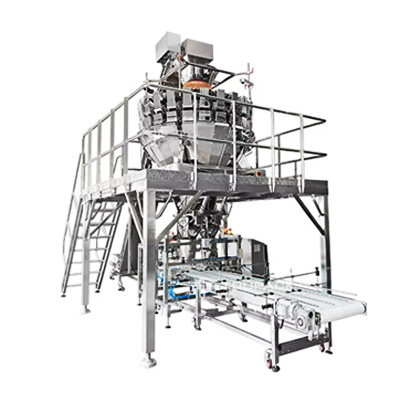
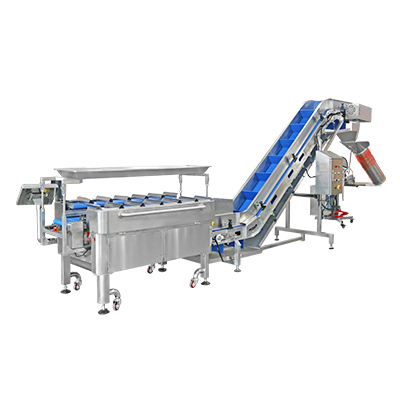
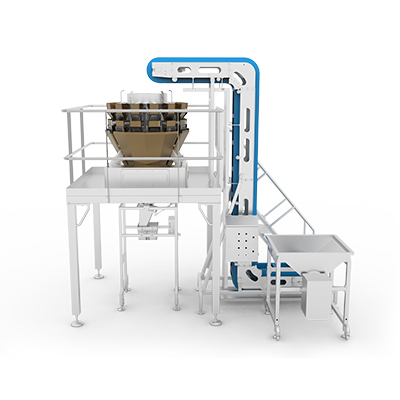
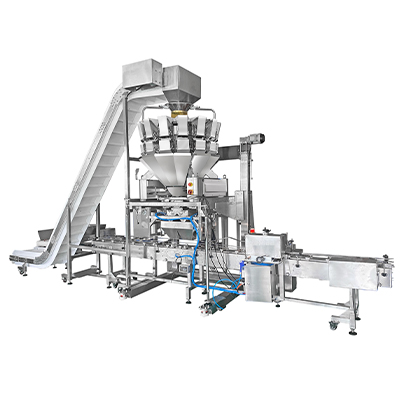
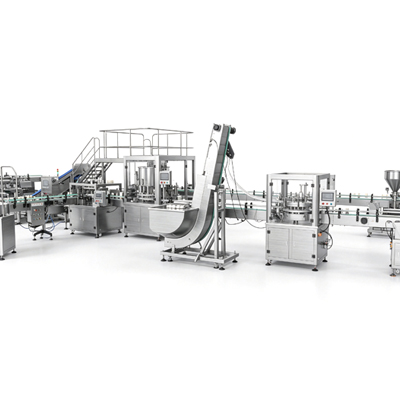
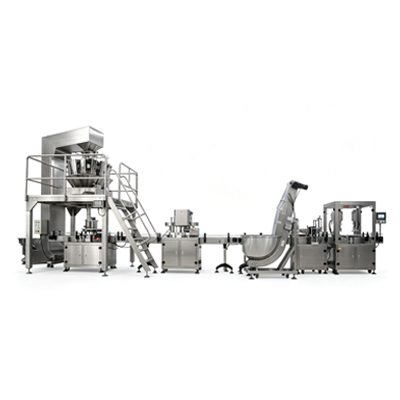
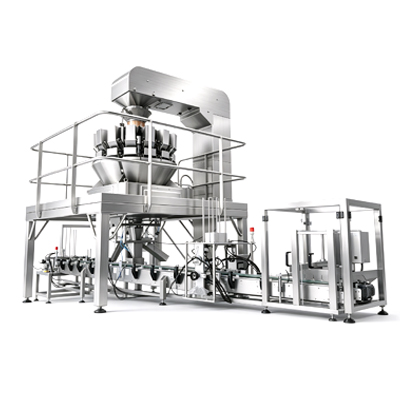
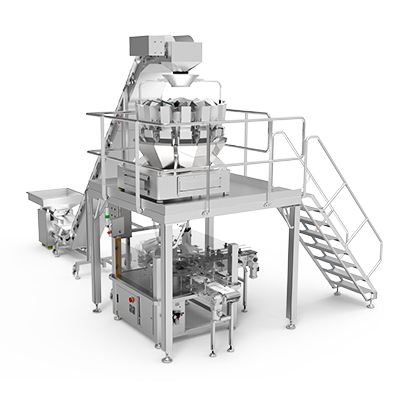
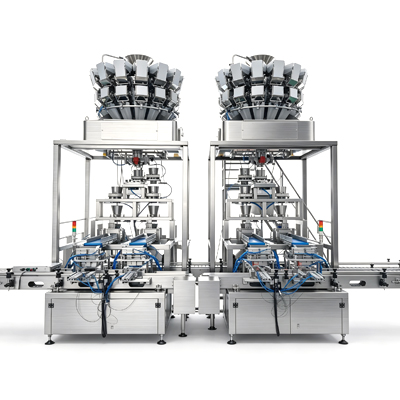
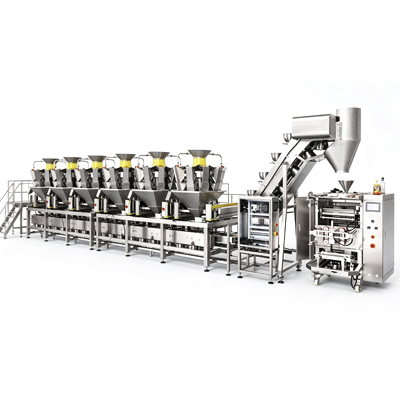
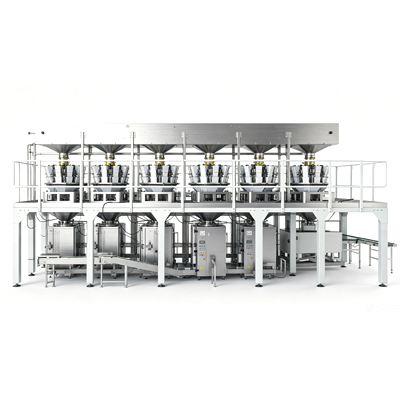
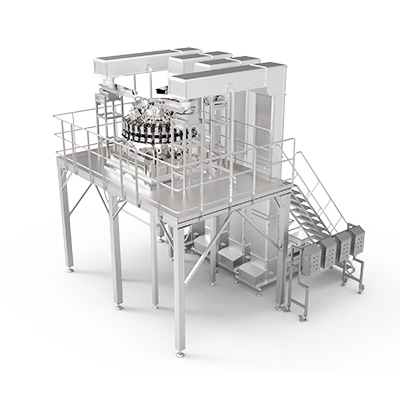
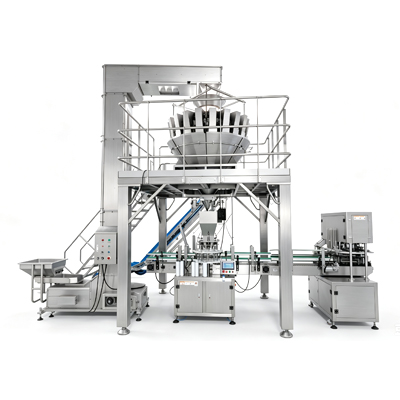
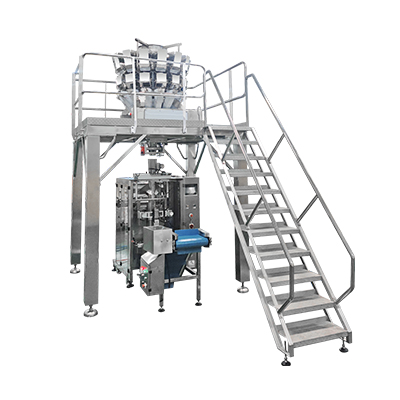
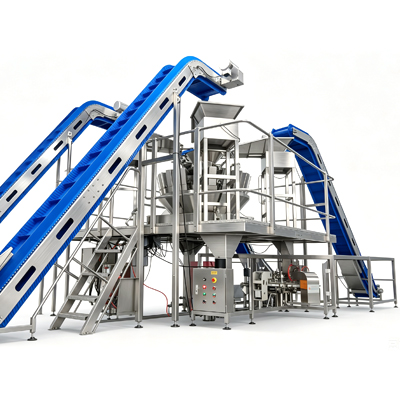
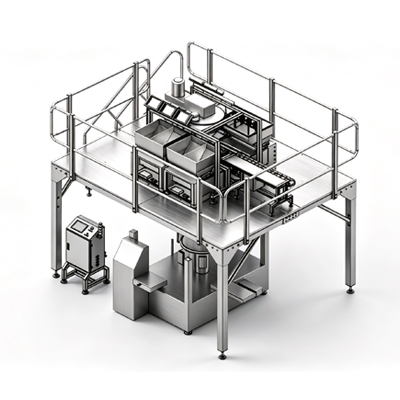
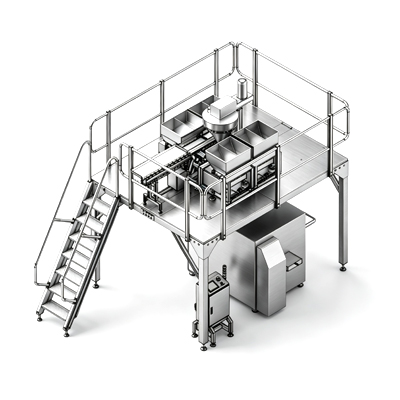
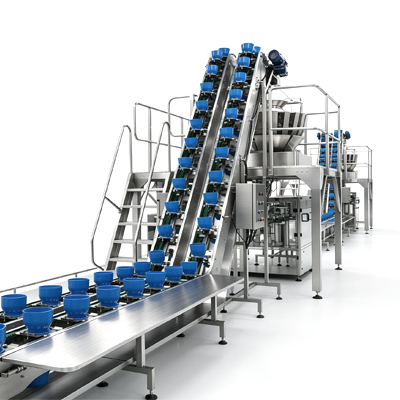
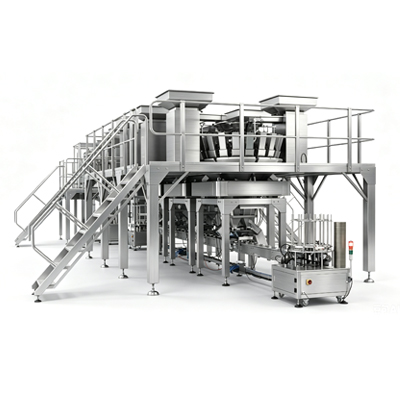
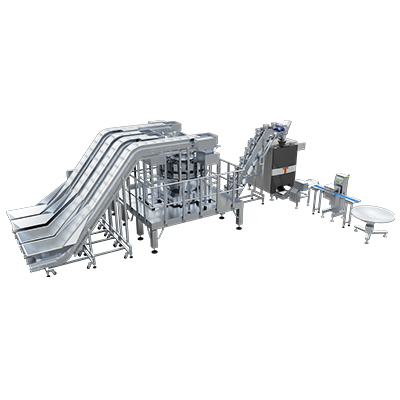
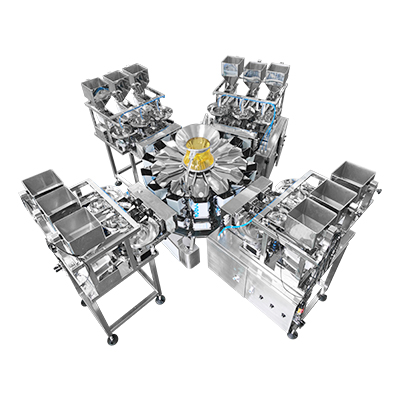
In modern food packaging production, choosing the right weighing equipment is critical to improving production efficiency, reducing material waste, and maintaining consistent product quality. Linear weighers and multihead weighers are two mainstream automatic weighing machines used on food packaging lines. While both types of equipment deliver precise weight control, they operate on completely different principles and suit different production requirements.
This selection guide provides an in-depth analysis of the core differences between linear weighers and multihead combination weighers, covering working principles, weighing accuracy, operating speed, applicable product types, investment costs, and key selection criteria for production line integration.
1. Understanding Linear Weighers
A linear weigher is an automatic weighing machine that uses one or multiple weighing hoppers to reach a target weight through controlled material feeding. During operation, product is fed into the weighing hopper via a vibration feed channel; when the material reaches the target weight, the hopper opens and discharges the product into the packaging machine for sealing.
Core Features
1. Simple mechanical structure and easy operation
2. Lower initial equipment investment cost
3. Suitable for materials with stable and uniform characteristics
4. Ideal for low to medium speed packaging production scenarios
Typical Applications
Linear weighers are widely used for weighing the following materials:
For scenarios with uniform material characteristics and moderate production speed requirements, a linear weigher offers a cost-effective weighing solution.
2. Understanding Multihead Combination Weighers
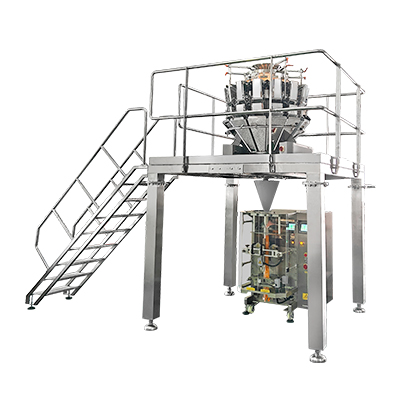
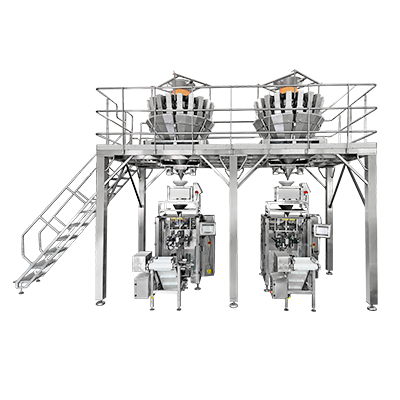
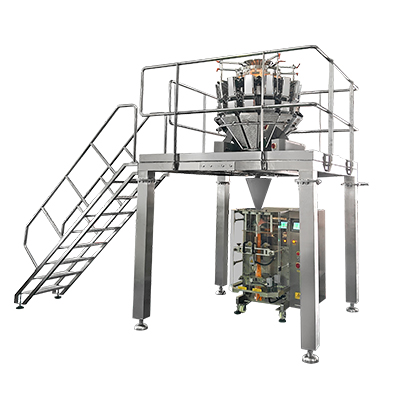
A multihead combination weigher (often shortened to multihead weigher) is a high-end automatic weighing machine equipped with multiple independent weighing hoppers, achieving ultra-high weighing accuracy through intelligent combination algorithms. Each weighing hopper measures different weights of material independently, and the control system automatically selects the optimal weight combination — infinitely close to the target weight and minimizing material overweight waste.
Core Features
1. Multiple weighing units working simultaneously
2. Equipped with intelligent combination calculation system
3. Excellent weighing accuracy
4. Meets high-speed production requirements
5. Flexible weight parameter adjustment
Typical Applications
Multihead weighers are suitable for products including:
Snack foods and potato chips
Nuts and candies
Crispy snacks and puffed food
Frozen foods
Seafood and aquatic products
Fresh poultry and meat
Pet food and pet feed
Fresh fruits and vegetables
In high-volume food production scenarios, multihead combination weighers effectively increase production capacity and optimize production costs.
3. Technical Comparison: Linear Weigher vs Multihead Weigher
Comparison Item | Linear Weigher | Multihead Weigher |
Working Principle | Single-channel or multi-channel independent weighing | Multi-hopper weighing + intelligent combination calculation |
Number of Weighing Units | Typically 1–4 heads | Typically 10–24 heads |
Weighing Accuracy | Medium accuracy | High precision |
Production Speed | Low ~ medium speed | High speed |
Material Overweight Loss | Relatively high | Relatively low |
Equipment Investment Cost | Lower | Higher |
Applicable Materials | Regular homogeneous materials | High-value, complex-shaped materials |
4. Accuracy Analysis: Material Waste Cost Comparison
The biggest advantage of a multihead weigher is its ability to reduce material overweight waste. For high-cost raw materials, even a few extra grams per package can accumulate into significant economic losses over long-term mass production.
Example: A factory with a daily production capacity of 10,000 bags — if each bag is overweight by just 2g, daily material waste can reach 20 kilograms.
By relying on intelligent combination algorithms to select the material combination closest to the target weight, multihead weighers help manufacturers:
Significantly reduce raw material waste
Improve product profit margins
Maintain consistent net weight per package
5. Speed Adaptation Reference for Different Scenarios
Different production conditions require matching weighing equipment:
Application Scenario | Recommended Equipment |
Low-speed granular material packaging | Linear Weigher |
Sugar and spice packaging | Linear Weigher |
Snack food packaging | Multihead Weigher |
Frozen food packaging | Multihead Weigher |
High-speed vertical form fill seal (VFFS) production lines | Multihead Weigher |
Large-scale food mass production | Multihead Weigher |
For enterprises pursuing high-speed automated production, a multihead combination weigher is generally the preferred solution.
6. Selection Guide
(1) When to Choose a Linear Weigher
1. Moderate production speed requirements
2. Low-value single product material
3. Weighing accuracy does not need to be extremely strict
4. Priority given to low-cost weighing solutions
(2) When to Choose a Multihead Weigher
1. Need for high-speed packaging capacity
2. High raw material costs
3. Strict net weight standards and high waste control requirements
4. Frequent switching between packaging weight specifications
5. Need to integrate with automated complete packaging production lines
7. LEESOLU Multihead Weigher Advantages
As a professional manufacturer of intelligent weighing and packaging equipment, LEESOLU provides customized weighing systems tailored to various food production needs. Our multihead weighers offer the following advantages:
Stable and reliable operation
Effectively improves production line capacity
Minimizes material overweight waste
Seamlessly integrates with vertical packaging machines and complete packaging lines
Covering snack foods, nuts, frozen foods, seafood, meat products, pet food and more, LEESOLU provides customized solutions for food industry manufacturers to improve packaging production efficiency.
8. Frequently Asked Questions
Is a multihead weigher more accurate than a linear weigher?
Yes. A multihead weigher is equipped with multiple weighing hoppers and an intelligent combination algorithm, delivering superior weighing accuracy compared to traditional linear weighing methods.
Which weighing equipment is recommended for snack food packaging?
A multihead weigher is generally recommended. Snack food production lines typically require high-speed operation and strict net weight control, making them well-suited for multihead weighers.
Can a linear weigher replace a multihead weigher?
In low-speed, simple-process production scenarios, a linear weigher can serve as an alternative. However, for mass production with dual requirements for speed and accuracy, a multihead combination weigher offers superior overall performance.
9. Conclusion
Linear weighers and multihead weighers each have their own advantages, suited to different production conditions. Linear weighers are ideal for production scenarios with simple processes and moderate speeds; multihead combination weighers are designed for manufacturers requiring high-speed production, high-precision weighing, and strict material waste control. Selecting the right weighing equipment requires a comprehensive assessment of material characteristics, production capacity needs, packaging specifications, and budget investment. Choosing the right equipment ensures efficient operation of the entire packaging line, controlled production costs, and consistently stable product quality.

20 YEARS Focus on
Poviding intelligent weighing
and packaging solutions