You are here:Home / Products / Weigher / Linear Weigher / 4-Head Linear Weigher 0.5L Single Layer | High Speed Small Powder Granule Weighing Machine 20–300g
loading
4-Head Linear Weigher 0.5L Single Layer | High Speed Small Powder Granule Weighing Machine 20–300g
Single-layer 4-head linear weigher with four separate 0.5L weighing hoppers, X(0.5) stable precision, max speed 40bpm, MCU + 7/10 inch touch HMI. Designed for medium-small portion powder, seasoning, coffee, grain, seed pouch packing, free material weighing trial available.
4-Head Linear Weigher (0.5L) — The Floor-Standing, 40 bpm Workhorse Built for Mid-Volume Retail Bag Lines
Most food lines lose margin in two silent ways: they buy a high-accuracy machine for a product that only needs standard tolerance — paying for precision they never use — and they let a slow weighing head starve a packer that could run forty bags a minute. This unit is engineered to fix both, on a stand that plugs into your floor and your grid the day it arrives.
Industry Pain Points
The Four Leaks That Hit Mid-Volume Bag Lines Hardest
If you pack 20–300g retail bags, stand-up pouches or portion packs, your economics are not the same as a micro-dose stick-pack line or a 25 kg bulk line. The leaks below are the ones your P&L actually bleeds from:
The Packer-Starving Bottleneck — Your bagging machine is rated for 40+ packs a minute, but the weigher upstream can only sustain 25–30. The packer waits on every cycle, your line OEE slides into the 50s, and the order you promised for Friday ships on Tuesday.
Paying for Precision You Will Never Use — A ±0.2g / 0.01g high-accuracy weigher is a beautiful machine — and a wasteful one when you are filling 100g bags of sugar or rice that only need standard retail tolerance. You financed a capability your product does not require, and your ROI curve pays the price for years.
️ The Integration Tax Nobody Quoted — A table-top or suspended unit arrives and then sits for weeks while you fabricate a support frame, level it, rewire it to your local voltage and align the discharge to your filler. "Plug-and-play" turned into a small construction project.
↔️ The Awkward Middle — Micro-dose weighers are too expensive and too delicate for your SKUs; big-bag weighers are too slow and too bulky. In the 20–300g middle, where most retail food actually lives, there is rarely a machine sized exactly to the job — so you over-buy or under-perform.
If you are weighing up which linear weigher gives the best output per dollar for small bags, the honest answer is rarely the most precise machine on the brochure — it is the one whose head-count, accuracy class and footprint match the bag you actually run. That machine is below.
The Solution
Four Heads. A Real Stand. A Voltage That Travels. One Machine Priced for the Job It Does.
The 4-Head Linear Weigher (0.5L) (Model TY-ZX041M05-01-11) is the deliberate answer to the awkward middle. Nothing on it is over-specified, and nothing is missing — every choice is tuned to mid-volume retail bag economics:
Head-count → throughput: four independent channels cycle in staggered overlap to hold a genuine 40 bpm, so the weigher feeds the packer at its rated speed instead of throttling it.
Accuracy class → honest ROI: an X(0.5) accuracy class with a 0.1g scale interval across 20–300g is exactly the tolerance standard retail food bags require — tight enough to protect your label claim, not so tight that you subsidise capability you do not sell.
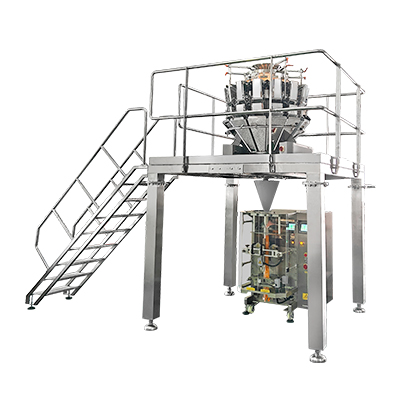
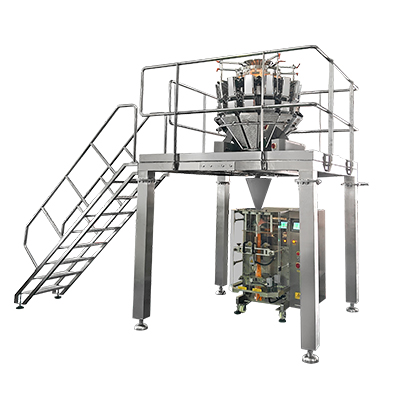
Stand → zero integration tax: a welded stainless support frame with four adjustable feet ships as part of the machine, so it stands on your floor at the correct discharge height the moment it is uncrated — no fabricated frame, no levelling shim marathon.
Power → it travels:AC220V / 110V ±10%, 50/60 Hz, 0.8 kW means the same unit plugs into a European, North American or Southeast Asian socket without a transformer or a rewire.
The result is a mid-volume line whose cost-per-bag you can model with confidence — and whose commissioning timeline you can finally promise to operations. Whether you are equipping a new retail line as a 20-300g linear weigher factory build or replacing the choking station on an existing line, this is the module that moves the bottleneck and respects the budget.
Core Advantages
Advantage 1 — A True 40 bpm That Keeps the Packer Fed
Feature: Four parallel weighing heads on an efficient single-tier feed, sequenced so that while two heads discharge, the other two are already topping up — a 40bpm four head linear weigher for retail bag packaging.
Advantage: The staggered overlap removes the dead time a two-head unit leaves between cycles, sustaining 40 bpm on a 20–300g bag without the speed collapsing the moment the product gets slightly sticky.
Benefit: Your bagging machine finally runs at the speed you paid for. Shift output climbs, the Friday order ships on Friday, and the weighing station stops being the line's quiet bottleneck. Asking how fast can a four head linear weigher run on retail bags? On this platform, 40 bpm is the sustained figure, not the brochure peak — and we will prove it on your product before you order.
Advantage 2 — X(0.5) Accuracy: Value Engineering, Not Under-Spec'ing
Feature: An X(0.5) accuracy class with a 0.1g minimum scale interval across the 20–300g range — an X(0.5) accuracy linear weigher for standard food pouches and a 0.1g scale interval linear weigher for sugar and rice bags.
Advantage: This is the tolerance band that standard retail and food-service bags are actually regulated and labelled to. The distribution is tight and repeatable where it matters for your label claim, without the cost of a sub-gram high-accuracy load-cell train your product does not need.
Benefit: You stop paying for "brag-about" precision. The capital you save versus a high-accuracy unit goes straight to your ROI — and on a 100g bag, 0.1g resolution is more than stable enough to keep every bag inside its declared weight. This is the honest answer to what accuracy do I need for standard food bag packaging: the accuracy your product uses, not the accuracy a salesperson can demo.
Advantage 3 — Floor-Standing & Dual-Voltage: Plug In and Produce
Feature: An integrated stainless support frame with four adjustable feet, paired with a AC220V / 110V ±10%, 50/60 Hz, 0.8 kW supply — a floor-standing linear weigher with support frame for VFFS and a dual voltage AC220V 110V linear weigher for export.
Advantage: The stand sets the discharge at the right height for your filler out of the crate, and the wide ±10% voltage tolerance absorbs real-world grid sag without tripping — so the same SKU ships to a 230V plant in Germany or a 120V plant in the USA unchanged.
Benefit: Commissioning collapses from "a few weeks of fabrication and rewiring" to "a day of levelling and a power cord." For an export buyer or a multi-site group, that is one machine, one spare-parts list, one training session — everywhere. Still deciding should I choose a floor-standing or table-top linear weigher? If your line is permanent and your filler is fixed-height, the integrated stand pays for itself in the integration time it deletes.
Advantage 4 — The Output-per-Dollar Sweet Spot for Mid-Volume Lines
Feature: Four heads × 40 bpm × 0.5L hoppers × an industrial MCU with a saved recipe library on a 7"/10" touch screen, packed into a compact 1086 × 710 × 898 mm footprint — a value 4-head linear weigher for mid-volume food lines.
Advantage: It sits exactly between the delicate, expensive micro-dose machines and the slow, space-hungry bulk machines — the segment where most retail food volume actually lives — delivering four-head stability at a capital cost sized to the job.
Benefit: Start-ups scaling a first retail line, and established plants adding a second SKU family, get four-head repeatability and 40 bpm throughput without financing a high-accuracy flagship they do not need. The four head linear weigher price for 40bpm seasoning line you pay buys the throughput you sell — and not a gram of capability you will never run.
Application Scenarios
Small-to-medium granular and powder products — sugar, rice, chicken essence, seeds, salt, milk powder, coffee, seasoning — dosed into retail bags, stand-up pouches and portion packs. This is four head linear weigher for medium pouch packaging throughput at a standard-accuracy price.
️ Scenario 1 — Seasoning, Spice & Chicken-Essence Retail Bags Free-flowing and slightly aerated seasoning, spice and chicken-essence powders into 50–250g retail bags is a volume game with a tight label claim. As a 0.5L hopper linear weigher for chicken essence and spice powder, the four heads hold 40 bpm while the X(0.5) class keeps every bag inside its declared weight — no over-specified load cells, no under-filled shelves.
Scenario 2 — Sugar, Rice & Salt Stand-Up Pouches Sugar, rice and salt are the textbook free-flowing granules where speed is the entire business model — the margin is in the volume. Mounted on its stand above a VFFS or pre-made pouch filler, it runs as a 0.1g scale interval linear weigher for sugar and rice bags, the four-head staggered cycle doubling effective cadence so a high-volume retail pouch line never idles waiting on the scale.
Scenario 3 — Wheat Grain, Seed & Cereal Bagging Wheat grain, seed and cereal into 100–300g retail and agri bags demand rugged, fast, repeatable dosing more than laboratory precision. Here the unit earns its keep as a four head linear weigher for wheat grain and seed bags: the 0.5L heads swallow the surge of a fast granule feed, the integrated stand takes the daily abuse of a grain line, and 40 bpm keeps the bagging station ahead of the shift target. Wondering is a 0.5L four head weigher enough for 20-300g pouches? This scenario set is the proof — the hopper is sized to the dose, not to a brochure, so it fills fast and clears clean across the whole range.
Technical Specifications
Grouped the way a mid-volume buyer actually evaluates: dosing performance, then control and electrical (because this sheet finally specifies power), then the physical footprint and weights that decide whether it fits your floor and your freight. (Unlike a micro-dose sheet, this model lists power and weights — so they are stated exactly as specified, not estimated.)
Dosing Performance
Parameter
Value
Model
TY-ZX041M05-01-11
Weighing Range
20 – 300 g
Accuracy
X(0.5)
Minimum Scale Interval
0.1 g
Maximum Speed
40 bpm
Hopper Volume
0.5 L
Control & Electrical
Parameter
Value
Control System
Industrial MCU (per-head tuning + recipe library)
HMI
7" / 10" colour touch screen
Power Supply
AC220V / 110V ±10%, 50/60 Hz, 0.8 kW
Form Factor & Weights
Parameter
Value
Packing Dimensions
1086 (L) × 710 (W) × 898 (H) mm
Net Weight
120 kg
Gross Weight
159 kg
In plain terms, this is the floor-standing 4-head linear weigher for sale that mid-volume retail lines default to — and the configuration behind most of the four head linear weigher price for 40bpm seasoning line quotes we send.
Quality & After-Sales (Trust)
Certified to Export. Honest on Spec. Backed Wherever the Stand Lands.
Certified — CE & ISO. Built and tested by an established 40bpm high speed linear weigher manufacturer and cost-effective 4-head linear weigher supplier to CE and ISO standards, with the paperwork that clears EU, North American and GCC customs on the first pass.
Honest — we spec to the job, not the demo. We will tell you when a standard X(0.5) class is the right, cost-correct choice for your bag — and when your product genuinely needs a higher-accuracy platform. That candour is why operations teams trust the quote they receive.
Hygienic & rugged — food-grade contact, line-grade frame. Product-contact surfaces in SUS304 / 316 stainless with clean, weld-free corners; the support frame and adjustable feet are built to take the daily vibration of a real grain or powder line.
Guaranteed — 1-year warranty, 48-hour spares. A documented wear-parts schedule ships with every unit and stocked spares dispatch within 48 hours, because on a 40 bpm line a worn feed tray cannot become a week of silence.
Supported — commissioned to your grid and your filler. We confirm your local voltage, return a stand-height integration drawing matched to your bagging machine, and pre-tune feed parameters on video — so the question can one linear weigher run on both 220V and 110V ends with a unit that is already configured for your socket, your height and your product.
FAQ
Q1 — Will it really hold 40 bpm on a 20–300g bag, and how does it match my packer?
40 bpm is the sustained figure on a free-flowing to moderately aerated product across this range, not a one-shot peak — the four-head staggered cycle is what makes it sustainable, because there is always a head ready to discharge while the others refill. The honest caveat is that your achievable speed is the lower of the weigher's 40 bpm and your packer's rated cycle, so matching matters. Send us your target bag weight and your packer's rated speed and we will model the pair — head-count, feed amplitude and discharge timing — and tell you the realistic line rate before you commit. That is exactly how we answer how fast can a four head linear weigher run on retail bags for a specific line: with your numbers, not a generic claim.
Q2 — Do I actually need a high-accuracy machine, or is X(0.5) right for my standard food bags?
For the large majority of retail and food-service bags — sugar, rice, salt, seasoning, grain, chicken essence — an X(0.5) class with 0.1g resolution is the cost-correct answer: it holds every bag inside its declared weight and label tolerance without the capital cost of a sub-gram high-accuracy load-cell train your product does not sell. You should step up to a higher-accuracy platform only when your contract or your product value genuinely demands it (premium micro-dose, nutraceutical, infant formula). We will tell you which camp you are in — that candour is the whole point of what accuracy do I need for standard food bag packaging, and it is why a value 4-head linear weigher for mid-volume food lines often beats a flagship on true ROI.
Q3 — Is the floor stand and dual voltage genuinely plug-and-play for my country and my line, and what is the lead time?
Yes on both, with two confirmations at order. The integrated stainless stand with four adjustable feet sets the discharge at the height your filler needs — we match that height to your specific bagging machine and return an integration drawing, so there is no frame to fabricate on site. The AC220V / 110V ±10%, 50/60 Hz supply covers essentially every export grid on one SKU, so the same unit runs in a 230V or 120V plant unchanged — which is the practical answer to can one linear weigher run on both 220V and 110V. Standard configurations ship on a published lead time; customised stand height, hopper finish or HMI language add a short, quoted extension. The result is a floor-standing linear weigher with support frame for VFFS that arrives ready for your floor, your grid and your filler — and the four head linear weigher price for 40bpm seasoning line quote you receive reflects exactly that configuration, including the stand and the lead time, not a bare-unit list figure.
Send Us Your Bag Weight, Your Packer's Speed and Your Socket. We'll Return the Output-per-Dollar Answer in 24 Hours.
Mid-volume lines do not need the most precise machine in the catalogue — they need the one whose head-count, accuracy class, stand height and voltage match the bag they actually run, at a price the ROI can carry. So skip the generic list price. Send us three numbers and we will do the engineering.
[Get a Free Output-per-Dollar Quote & 40 bpm Line Model] [Request a Stand-Height Integration Drawing for Your Filler] [Run the Line Calc with a Weighing Engineer — Reply Within 24h]
No obligation. No over-specified upsell. Just a floor-standing, dual-voltage, four-head solution sized to the job — and the lead time to match.
Disclaimer: Machine renderings, engineering dimension drawings and all technical parameters displayed on this page are for reference purposes only. Please consult our professional sales engineer to confirm customized specifications matching your powder fineness, multi-spec mixed pouch packing layout and hourly medium-batch retail pouch throughput demands.
Product Description
Submit Your Requirements
Please submit your requirement form, and we will customize the most suitable solution according to your needs.
Automated mesh bagging extends produce shelf life by providing vital airflow. Upgrading your line slashes labor costs, stops product giveaway, and maximizes daily output.
Dust-controlled powder fillers use vacuum extraction and servo-driven augers to package fine materials. These automated systems prevent waste, ensure safety, and maximize ROI.
Horizontal packaging machines use lateral movement to safely package solids, powders, and liquids. These systems ensure leak-proof seals, cut labor costs, and maximize your ROI.
It is a high-tech enterprise specializing in the R&D, design, and independent manufacturing of packaging, conveying, weight detection, weighing, and filling equipment.