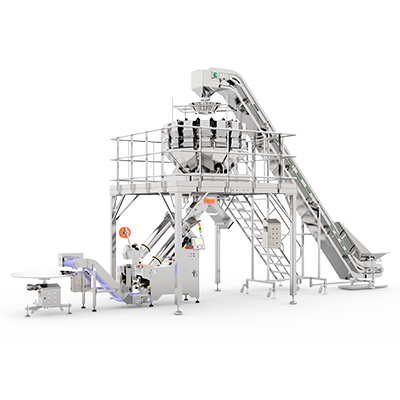
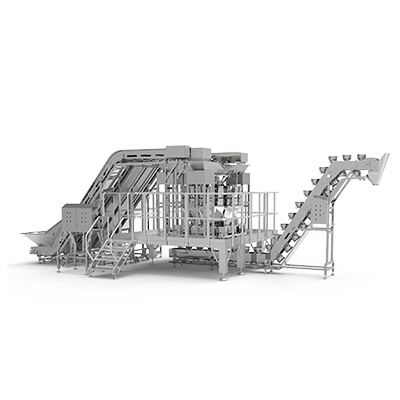
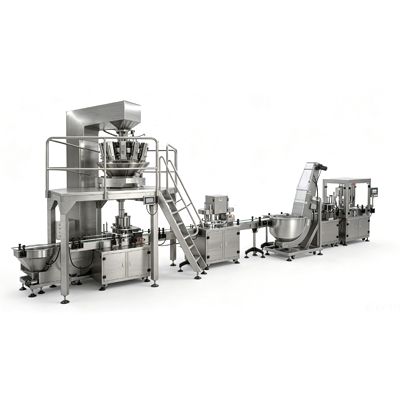
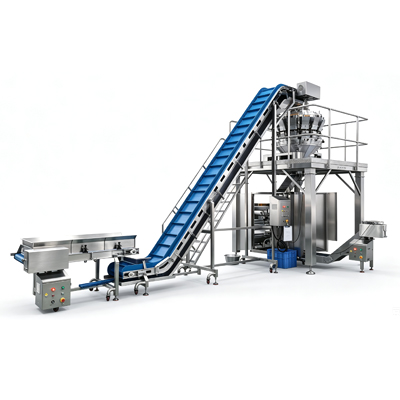
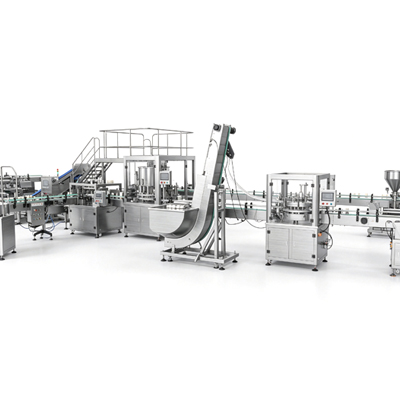
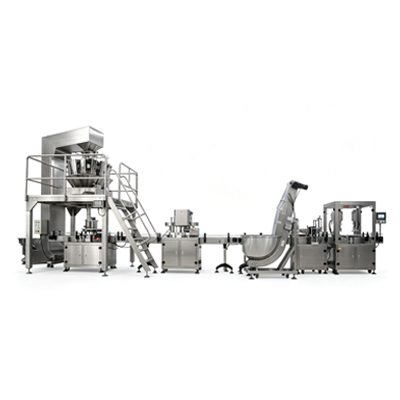
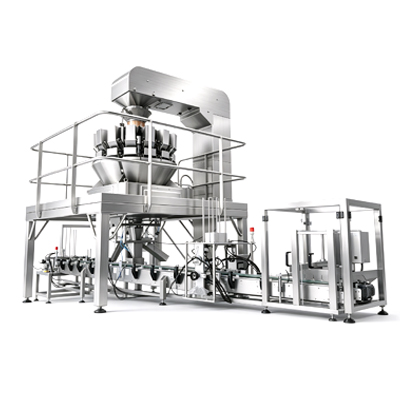
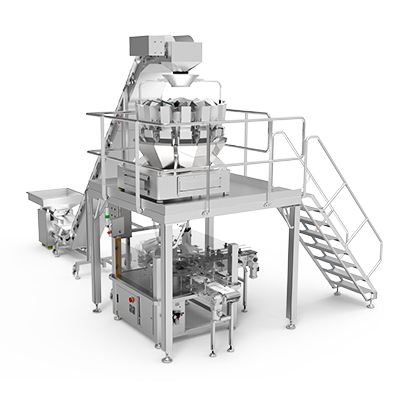
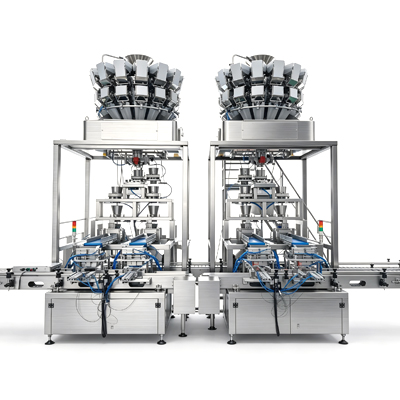
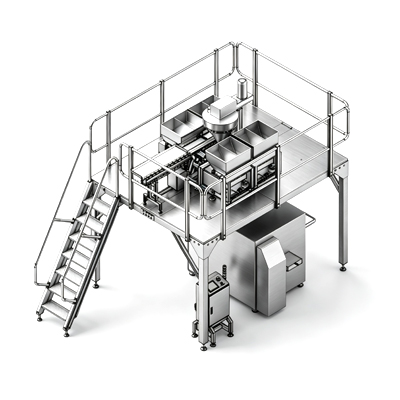
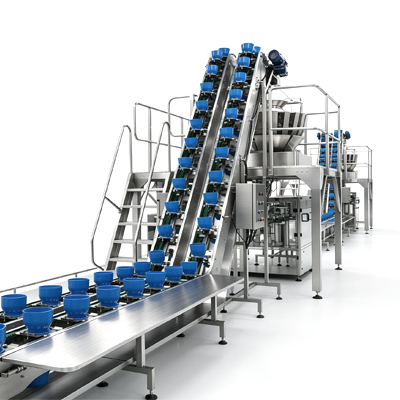
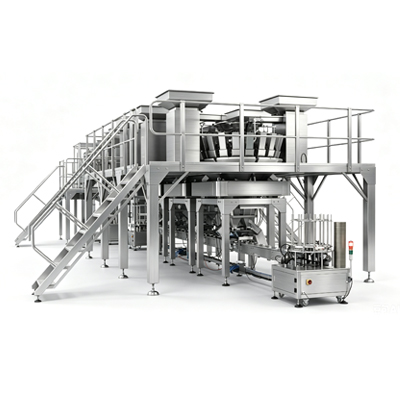
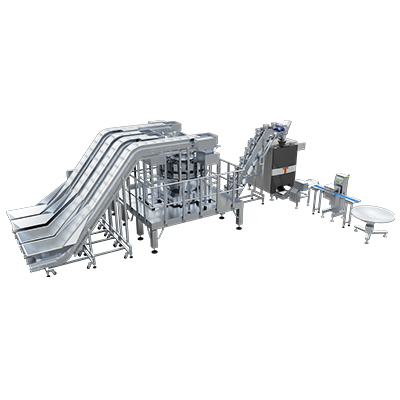
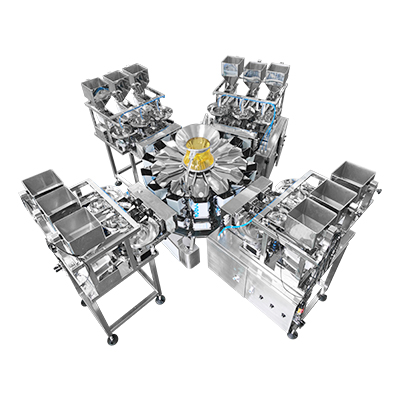
When one camera filling one bag is the bottleneck, count in parallel. The D850/D1650 is a multi-channel vision counting machine with a three-level vibration pan and a multi-channel frame that counts several lanes at once — each lane filling its own bottle or small pack with a small, exact amount at up to 20 cycles/min and ≤1% counting error. The high-precision, high-frequency counter for tablets, capsules, coated pills, metal rings and buttons.
Some packing lines do not have a “bulk” problem — they have a “many small packs, fast” problem. Picture a bottling line that must fill twenty bottles a minute, each bottle holding only forty tablets, and switch to a different bottle and a different tablet three times an hour. A single-stream counter that pours thousands of pieces into one big bag is the wrong tool here: it is built for volume into one outlet, not for many outlets, each needing a small, exact number, repeatedly. The D850/D1650 Vision Counting Machine is built for exactly that job. It is a multi-channel vision counting machine — a platform whose whole architecture is organised around doing several small counts in parallel instead of one large count in series. Product enters a top hopper and is handed to a three-level vibration pan: rather than racing the parts down a single chute, the stepped vibrating decks spread them sideways into a thin, even sheet, so that the multi-channel frame beneath receives a calm, balanced feed into every lane at once. Each lane then becomes its own little counter — imaging its stream, tallying its pieces, and cutting off the instant its small target is reached — and because the lanes run side by side, the machine completes a whole row of packs in a single beat.
This is the meaning of the headline figure, and it is worth reading correctly. The D850 and D1650 are rated at 20 cycles per minute — and a “cycle” here is not one piece, it is one parallel batch: every cycle, all active lanes finish their individual small counts and discharge together, so the real output is 20 × (number of lanes) finished packs per minute. That is the “high-frequency, high-speed, small-amount” character the platform is designed for: high frequency because the line changes pack after pack after pack without pause, high speed because parallelism multiplies the throughput, and small amount because each lane is topping up a modest, precise quantity — a bottle, a blister, a tube, a small sachet — not a bulk sack. It is the counting philosophy inverted: where a bulk counter optimises pieces per second through one gate, the D-series optimises packs per minute across many gates, which is the only sane way to keep up with a multi-outlet bottling or kitting line.
Application Industries
Wherever a line fills many containers at once, each with a small, verified quantity, and changes format often, this multi-channel parallel counter replaces single-stream counting, weigh-filling and manual kitting.
Parallel counting and bottling of tablets, capsules, softgels and coated supplements into several bottles, blisters or tubes per cycle; per-lane optics read both flat discs and glossy capsule shapes, and the ≤1% band delivers the exact, auditable count per bottle that regulation and label claims require.
Hardware Rings, Washers, Seals & O-Rings
Parallel kitting of metal rings, washers, gaskets and O-rings into multi-pack bags or compartment trays; each lane verifies its own small batch, so a missing ring is caught before it ships instead of becoming a returned kit.
Buttons, Beads & Garment Trims
Count-sold packing of coloured buttons, beads and garment trims into retail cards and multi-piece packs; per-lane silhouette reading holds colour-mix and short counts — the two defects behind trim-pack complaints — inside tolerance on fast colour runs.
Confectionery & Count-Sold Small Goods
Portioning coated candies, mints and other count-sold sweets into parallel tubes, boxes or sachets for consistent pieces-per-pack labelling; the same independent-lane design also counts small terminals, pins and connectors on high-mix lines, where one lane can change product without halting the rest.
Industry Pain Points & Professional Solutions
The problems below are not the problems of a bulk counter or a checkweigher — they are the problems of trying to run a many-small-packs line with a one-outlet mindset. Each is shown as a Before / After so the gain from parallel multi-channel counting is read at a glance.
Pain #1 — One outlet cannot keep a multi-bottle line fed. Before: A single-stream counter fills one bag at a time, so a line with twelve filling positions either waits idle or runs a clumsy indexing dance; the counter becomes the slowest link and the line’s OEE collapses. After:The D-series discharges several lanes at once, one per filling position, so a single cycle fills a whole row of bottles — the counter now matches the line’s parallelism instead of strangling it.
Pain #2 — Small packs make weighing meaningless. Before: A bottle of forty capsules weighed and divided by average mass scatters badly, because forty light capsules do not average out the way four thousand would; the pack count drifts and the label lies. After:Each lane counts discrete objects to ≤1%, so a forty-piece bottle holds forty objects the camera saw — the smaller the pack, the more the per-lane optical count beats a scale.
Pain #3 — One jammed lane stops the whole machine. Before: On a ganged single-feed counter, a clump or a mis-feed in one section stalls the shared feed and idles every outlet until it is cleared. After:The multi-channel frame gives each lane its own feed path and its own tally, so a hiccup in one lane is contained to that lane while the others keep finishing packs.
Pain #4 — Uneven feed starves the outer lanes. Before: A flat vibrating deck pushes product to the centre, leaving the edge lanes thin and slow, so parallel lanes finish at different times and the cycle rate drops to the speed of the emptiest lane. After:The three-level vibration pan spreads the product sideways into an even sheet before it reaches the lanes, balancing the feed so all channels fill together and the cycle rate stays at its rated 20/min.
Pain #5 — High-mix lines lose hours to changeovers. Before: Switching bottle size or product on a single-stream rig means re-tuning one big feed and one big gate, and the whole line stops for the duration. After:Per-lane optical recipes and adjustable lane geometry let the format change be loaded and tuned lane by lane, and because lanes are independent, partial changeovers and quick product swaps cost far less downtime.
Pain #6 — Pharma audits demand a defensible per-bottle count. Before: A bulk weigh-fill gives a pack weight, not a verified object count, leaving the quality file thin when an auditor asks “how do you know it is forty?” After:Per-lane vision verification produces an object-level count per discharge, giving the documented, per-pack evidence that solid-dose quality systems expect.
Core Product Features & Technical Advantages
Multi-Channel Parallel Counting Frame
A multi-channel frame runs several independent counting lanes side by side, each imaging and tallying its own stream, so the machine completes a set of packs per cycle instead of one pack per cycle — the core of the “high-frequency, small-amount” throughput model.
Three-Level Vibration Pan
A stepped, three-level vibrating pan distributes product laterally into a thin, balanced sheet rather than rushing it down one chute, evening out the feed to every lane so no channel is starved and the cycle rate holds.
≤1% High-Precision Counting
A tight per-lane counting-error band suited to small packs and regulated goods, achieved by singulated feed plus per-lane optical verification — the precision a forty-piece bottle needs, not the precision a four-thousand-piece sack can get away with.
20 Cycles/min Parallel Output
A rated 20 parallel batches per minute, where each batch is a full set of lane discharges; real pack output scales with the number of active lanes, multiplying throughput without raising the per-lane speed into an error-prone range.
Independent Per-Lane Control & Cut-Off
Each lane owns its tally and its pneumatic gate, so lanes reach target and release independently — one slow or jammed lane is contained and never idles the rest of the frame.
Two Widths for Two Lane Counts (D850 / D1650)
The narrower D850 deck suits a tighter lane set; the wider D1650 frame hosts more parallel channels and a broader vibrating surface, lifting packs-per-cycle — same length and height, chosen by how many outlets your line fills at once.
Free-Standing Leg Frame at Working Height
A stainless leg frame sets the counting deck and discharge at ergonomic height and lets the unit stand alone or dock to a bottling index table without a built-in base.
Low Power & Simple Utilities
Only 1.0 kW (D850) / 1.4 kW (D1650) on AC 220 V ±10% / 50 Hz, plus clean air at 0.5–0.8 MPa (≤1.0 m³/min) for the per-lane gates — modest running cost on a standard line.
Stored Per-Lane Optical Recipes
Size and shape thresholds are saved per product and per lane, so high-mix lines recall a recipe at changeover instead of re-tuning hardware — fast swaps on multi-SKU bottling.
Automatic Working Process
Bulk Loading — Product is poured into the top hopper, buffering supply above the distribution system.
Three-Level Vibratory Distribution — The stepped vibration pan meters the product out and spreads it sideways into a thin, even sheet, balancing the flow toward every lane instead of concentrating it in the centre.
Multi-Channel Split — The even sheet is divided across the parallel lanes of the multi-channel frame, each lane receiving its own calm, singulated stream.
Per-Lane Optical Counting — Each lane’s vision window images its stream and increments its own tally, verifying pieces to the ≤1% band independently of the other lanes.
Per-Lane Target Compare — Each lane compares its live count to its own small-batch target; lanes reach target at their own pace without waiting on neighbours.
Parallel Discharge — As lanes hit target, their pneumatic gates release the counted amounts into the aligned bottles, blisters, tubes or bags below — several packs completed in a single beat.
Synchronised Reset & Next Cycle — The frame resets the lanes and the next parallel batch begins, sustaining the rated 20 cycles/min of multi-pack output, cycle after cycle.
Technical Specifications
Parameter
D850
D1650
Model
D850
D1650
Counting Efficiency
20 cycles (batches)/min
20 cycles (batches)/min
Counting Error
≤1%
≤1%
Machine Power
1.0 kW
1.4 kW
Power Supply
AC 220 V ±10%, 50 Hz ±1%
AC 220 V ±10%, 50 Hz ±1%
Air Pressure
0.5 – 0.8 MPa
0.5 – 0.8 MPa
Air Consumption
≤1.0 m³/min
≤1.0 m³/min
Dimension (L×W×H)
1930 × 680 × 1960 mm
1930 × 1080 × 1960 mm
Machine Weight
240 kg
280 kg
Architecture
Multi-channel parallel frame
Multi-channel parallel frame
Feed System
Three-level vibration pan
Three-level vibration pan
Form Factor
Free-standing leg frame
Free-standing leg frame
Both models share the same length, height, utility needs and ≤1% precision; the D1650 is the wider configuration (1080 vs 680 mm deck) that hosts more parallel lanes and a broader vibrating feed surface, raising the number of packs completed per cycle. Lane count, lane pitch, discharge outlet layout and per-lane recipes are configured to your bottle/pack format and target pieces-per-pack.
FAQ
Q: What is the practical difference between the D850 and the D1650?
Same length, same height, same precision, same utilities — the D1650 is the wider machine (1080 mm deck vs 680 mm), so it carries more parallel lanes and a broader three-level feed surface, completing more packs per cycle. Choose the D850 when your line fills a modest number of outlets at once; choose the D1650 when the bottling or kitting index has more positions to feed in parallel.
Q: How do you hold ≤1% on a small pack?
Two things working together. First, the three-level vibration pan delivers parts to each lane spread out and singulated, so the optics see individuals rather than clumps. Second, each lane verifies its own small tally independently, so the count is read from objects actually seen in that lane — not averaged across a big bulk stream where a one-percent swing would be dozens of pieces. On a forty-piece pack, that per-lane verification is exactly what keeps the error inside one percent.
Q: Why a three-level vibration pan instead of one flat deck?
A single flat deck tends to push product to the middle, starving the outer lanes and making the cycle rate fall to the speed of the emptiest lane. The stepped three-level pan spreads the product sideways into an even sheet before it reaches the lanes, so all channels are fed evenly and finish together — which is what lets the parallel cycle rate actually reach its rating.
Q: If one lane jams or runs slow, does the whole machine stop?
No. Each lane has its own feed path, its own tally and its own discharge gate, so a mis-feed or a slow lane is contained to that lane. The other lanes keep counting and discharging on their own schedule, which is a major availability advantage over a ganged single-feed counter where one blockage idles every outlet.
Q: Can different lanes run different products or different pack counts at the same time?
The lanes are independently controlled and carry independent recipes, so per-lane targets differ freely, and on high-mix lines lanes can be reconfigured product-by-product. Whether fully mixed product per lane is appropriate depends on cross-contamination rules (critical in pharma) — for regulated goods we typically run one product across the frame and use the parallelism for throughput, while reserving per-lane independence for fast, lane-by-lane changeover. Tell us your contamination policy and we configure accordingly.
Q: How does this compare with the B25/B60 single-stream counter — which do I need?
They solve opposite problems. The B25/B60 is a single-stream bulk counter: one torrent of parts, one camera, one bag, optimised for pieces per minute into one outlet (thousands of seeds, screws, grains). The D850/D1650 is a multi-channel parallel counter: many lanes, many outlets, a small exact amount in each, optimised for packs per minute across many outlets at ≤1%. If you fill one big bag with a lot of pieces, you want the B-series; if you fill many bottles or small packs with a few dozen pieces each and change product often, you want the D-series. Many lines use both at different stations.
Contact Us
The right D-series configuration depends on three numbers only you know: how many outlets you fill at once, how many pieces each pack holds, and how often you change product. Give us those and we will size the lane count, choose D850 vs D1650, and lay out the discharge pitch to your bottling or kitting index — before you commit. We also offer a free parallel-counting sample test: send your product and your target pieces-per-pack, and we will run it across the multi-channel frame and report the achieved per-lane accuracy and packs-per-minute.
Product Description
Submit Your Requirements
Please submit your requirement form, and we will customize the most suitable solution according to your needs.
Automated mesh bagging extends produce shelf life by providing vital airflow. Upgrading your line slashes labor costs, stops product giveaway, and maximizes daily output.
Dust-controlled powder fillers use vacuum extraction and servo-driven augers to package fine materials. These automated systems prevent waste, ensure safety, and maximize ROI.
Horizontal packaging machines use lateral movement to safely package solids, powders, and liquids. These systems ensure leak-proof seals, cut labor costs, and maximize your ROI.
It is a high-tech enterprise specializing in the R&D, design, and independent manufacturing of packaging, conveying, weight detection, weighing, and filling equipment.