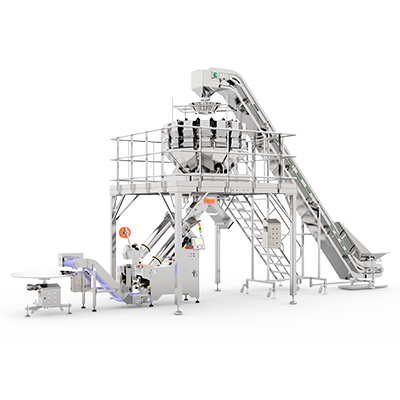
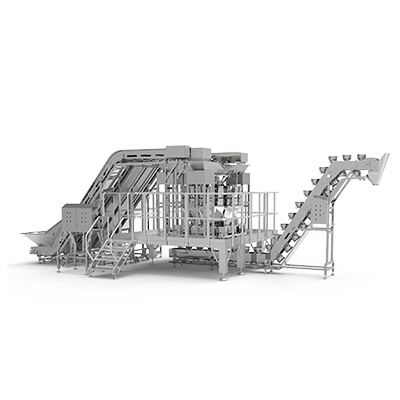
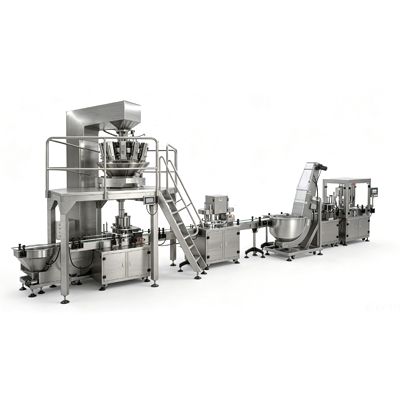
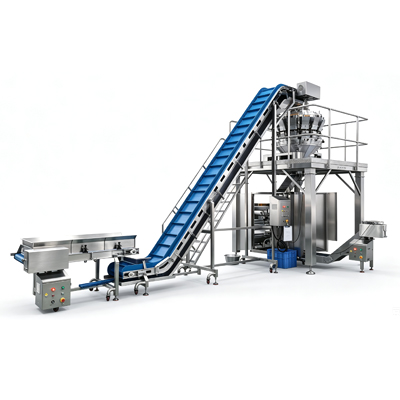
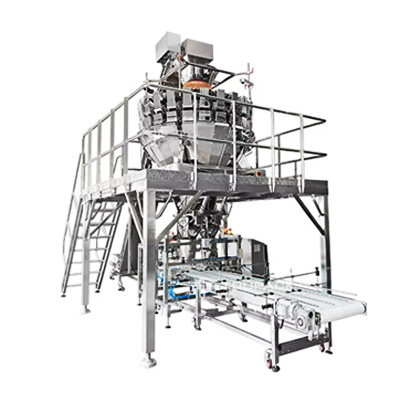
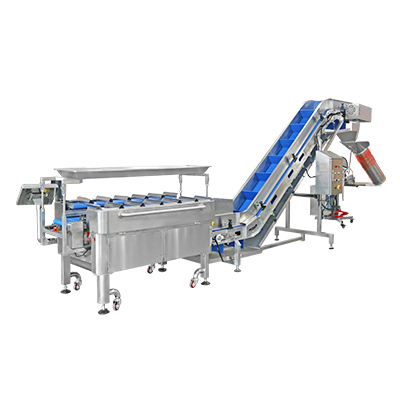
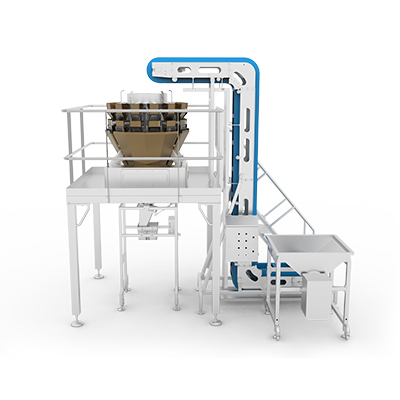
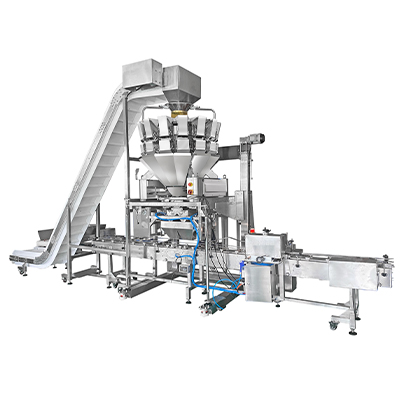
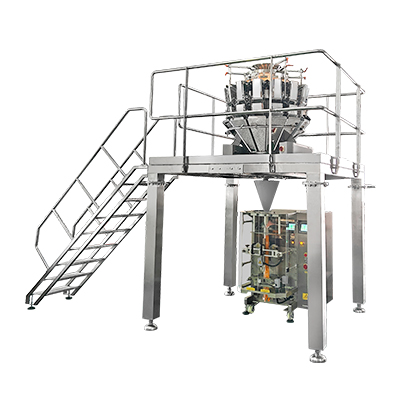
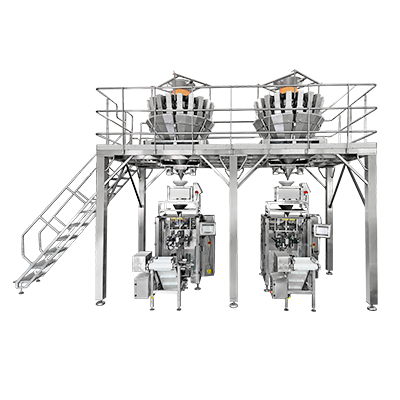
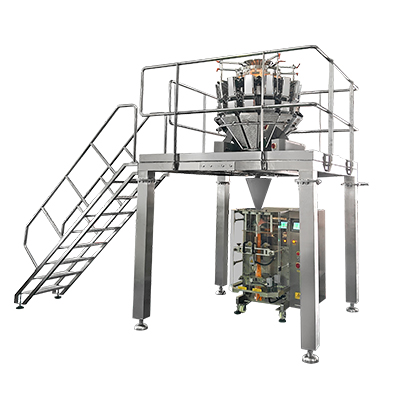
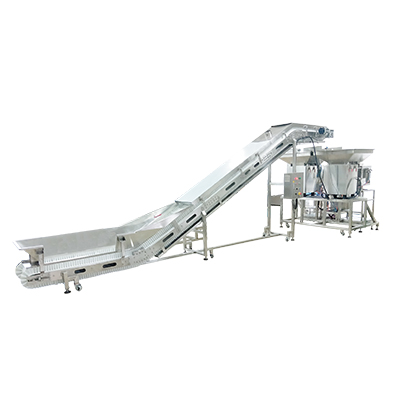
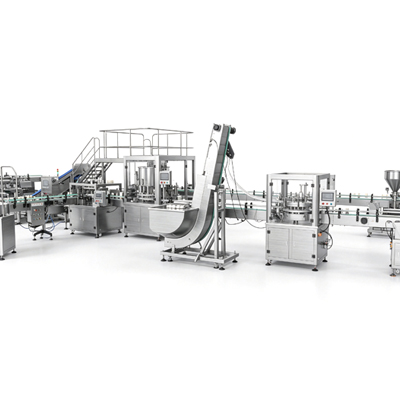
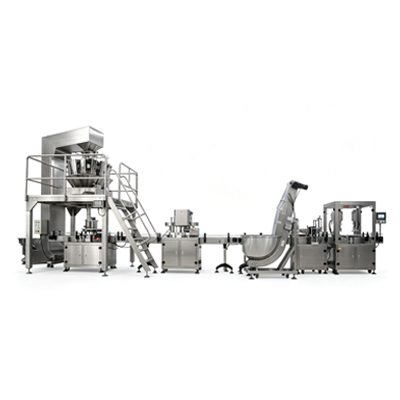
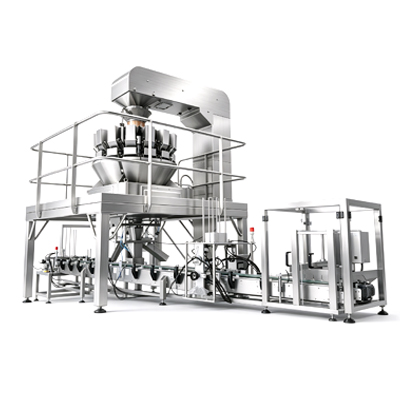
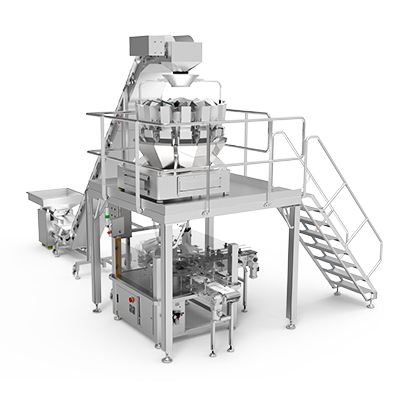
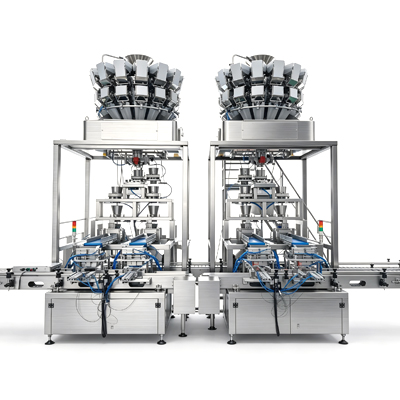
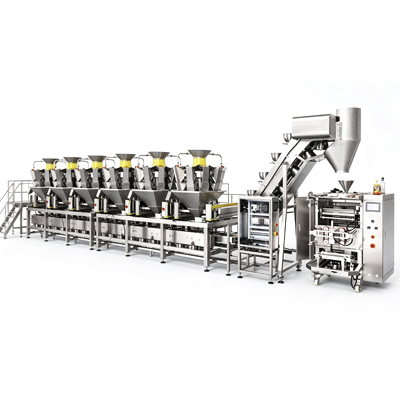
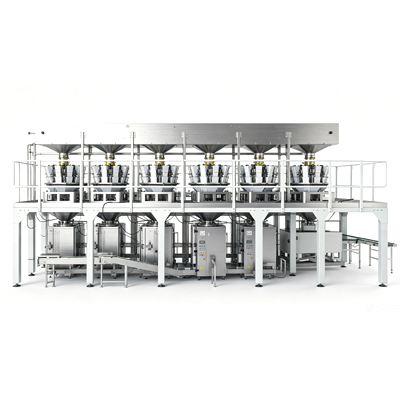
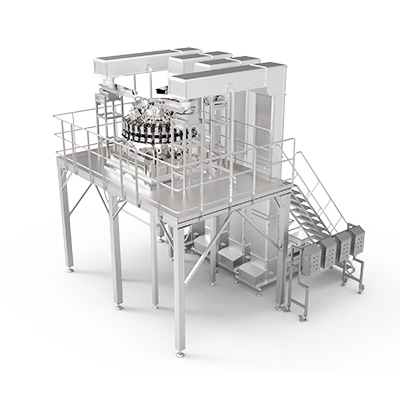
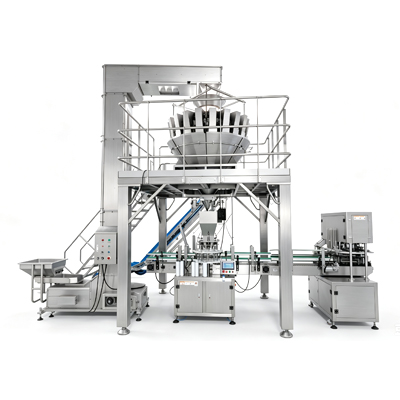
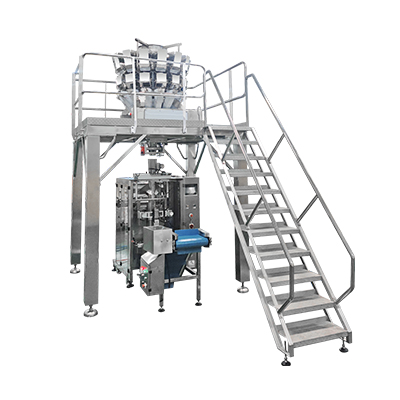
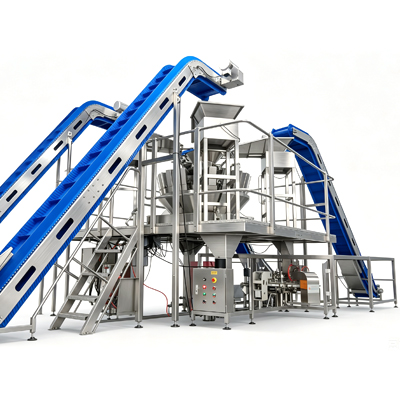
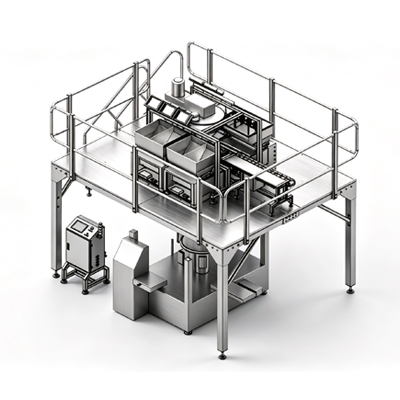
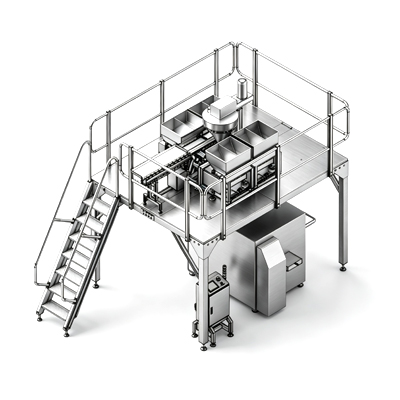
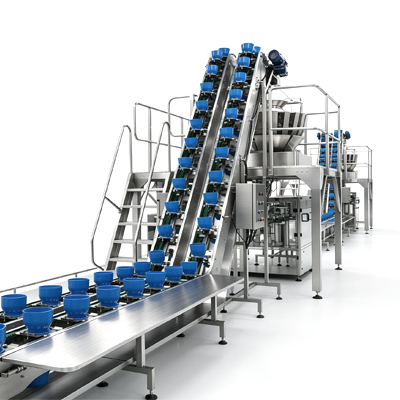
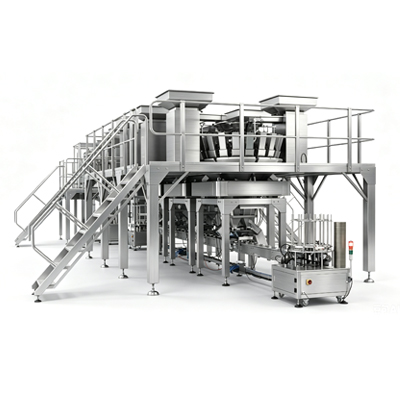
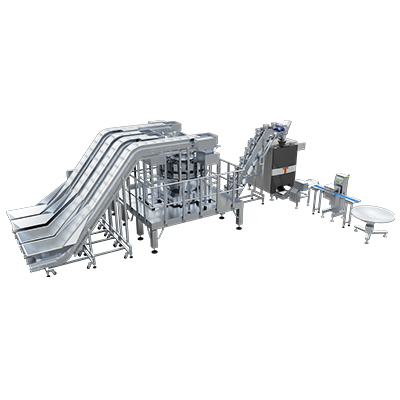
Bucket elevators are the core connecting equipment in automated packaging and bulk material handling lines, responsible for transferring materials from low-level feeding points to high-level processing or packaging stations. Proper bucket elevator selection directly determines your line’s conveying efficiency, material loss rate, sanitary compliance and long-term maintenance cost. This guide breaks down selection logic from working principles, common types and industry-specific requirements, and introduces the sanitary design strengths of Leesolu elevators for high-standard production scenarios.
Core Working Principles & Key Functions of Bucket Elevators
Basic Working Principle
A bucket elevator uses load-bearing components (buckets, spiral blades, troughs, etc.) to move along a preset closed track, continuously lifting bulk materials from the low inlet to the high outlet for vertical or inclined transfer. It can be equipped with buffering, metering and dust removal modules to match the cycle rhythm of fully automated production lines.
Core Functions
Steady continuous feeding: Delivers uninterrupted material supply for downstream equipment such as multihead weighers and packaging machines, balances rhythm gaps between upstream and downstream processes, and prevents material shortage or accumulation.
Vertical space optimization: Overcomes plant height differences, enables three-dimensional line layout and significantly reduces workshop floor occupation.
Enclosed dust control: Most models support fully enclosed conveying to cut dust leakage, reduce material waste and minimize workshop pollution.
Flexible multi-point layout: Certain structures support multiple inlets and outlets, can bypass on-site equipment obstacles and adapt to complex production line configurations.
Key Selection Criteria
Conveying capacity: Output per unit time (L/h or kg/h), with a 10%–20% capacity reserve recommended to match downstream equipment peak load.
Material compatibility: Adaptability to granular, powdery, lumpy, brittle or sticky materials.
Material breakage rate: Protection performance for fragile and deformable products.
Sanitary grade: Compliance with cleaning, disinfection and regulatory standards of the target industry.
Footprint & installation: Requirements for workshop space, ceiling height and on-site installation conditions.
Total cost of ownership: Wear part replacement cycle, cleaning difficulty, failure rate and daily maintenance convenience.
Main Types of Bucket Elevators & Their Technical Features
Z-Type Bucket Elevator (Turnover Bucket Elevator)
Structure & principle: Driven by modular chain plates, food-grade plastic or stainless steel buckets run along a Z-shaped path (horizontal feeding – vertical lifting – horizontal discharging). Buckets automatically flip and discharge at turns under self-weight and rail guidance.
Key features: Supports multi-point feeding and multi-point discharging; materials are carried in independent buckets with minimal collision and extremely low breakage rate; flexible layout to bypass equipment obstacles with compact footprint.
Limitations: Single-unit lifting height is usually ≤10m with medium conveying capacity, not suitable for ultra-high or ultra-large capacity scenarios.
Suitable materials: Nuts, candies, puffed snacks, pet kibble, hardware parts and other granular, lumpy, fragile materials.
Vertical Bucket Elevator
Structure & principle: Available in three traction types: ring chain, plate chain and belt. Buckets travel vertically upward and discharge at the top via centrifugal force or gravity.
Key features: Large lifting height (up to tens of meters); high conveying throughput; simple structure with low per-unit maintenance cost.
Limitations: Only supports single-point feeding and single-point discharging; higher risk of material collision and breakage; dust overflow may occur during top discharge.
Suitable materials: Grain, ore, chemical raw materials and other bulk materials with low breakage sensitivity.
Screw Elevator (Auger Conveyor)
Structure & principle: A motor drives the screw shaft to rotate, and continuous spiral blades push materials upward inside a closed barrel.
Key features: Fully enclosed barrel structure with excellent dust-tight performance; ultra-compact footprint; ideal for sticky and dusty powder materials.
Limitations: Materials are under continuous blade extrusion, prone to breakage and deformation; not compatible with large or highly brittle materials; limited conveying distance and height.
Suitable materials: Flour, starch, seasonings, chemical powders and other fine powdery or granular materials.
Vibratory Elevator
Structure & principle: Generates directional excitation force via vibration motors, making materials jump forward continuously along a spiral trough.
Key features: No extrusion or scraping contact, ultra-low material breakage rate; can integrate drying or cooling functions during conveying; no transmission parts contact materials for better hygiene.
Limitations: Low lifting height and small throughput; relatively high operating noise.
Suitable materials: Tablets, fragile food products, precision hardware parts and other extrusion-sensitive, high-brittleness items.
Industry-Specific Bucket Elevator Selection Guide
Food Processing Industry (Snacks, Nuts, Frozen Food, Confectionery)
Core requirements: Food contact safety compliance, low material breakage, zero sanitary dead corners, easy cleaning and disinfection.
Recommended model: Z-type bucket elevator; screw elevators for powder seasonings and flour applications.
Selection points:
All material-contact parts must use food-grade stainless steel; easily degradable or rust-prone materials are prohibited.
Body structure must avoid grooves, gaps and residue-trapping zones, supporting daily wiping, water flushing and even CIP cleaning.
For brittle products, choose deep-bucket structure with low-speed operation to reduce collision breakage.
Pet Food Industry (Extruded Kibble, Freeze-Dried Treats)
Core requirements: Continuous large-capacity conveying, low breakage, cross-contamination prevention, fast cleaning for formula changeover.
Recommended model: Z-type bucket elevator paired with large-capacity buffer hopper.
Selection points:
Conveying capacity must match full-load output of downstream multihead weighers and packaging machines, with reserve capacity for order fluctuations.
Quick-disassembly structure for the whole machine enables fast cleaning during formula or color changeover to avoid cross-contamination.
Frame design must resist residue and dirt buildup, adapting to pet food’s high oil and crumb characteristics.
1.High-strength bucket material to withstand impact and abrasion from metal and plastic parts.
2.Equipped with jam detection and overload protection to prevent equipment damage from material blockage.
Leesolu Bucket Elevators: Differentiated Advantages for Sanitary Production
For the three most common pain points in food, pet food and pharmaceutical industries — hard-to-clean sanitary dead corners, dirt buildup causing contamination, and substandard material quality — Leesolu bucket elevators deliver systematic optimization from structural design to material specification.
Outward-Turned Frame Structure: Eliminates Hidden Dirt Traps at the Source
Traditional bucket elevators mostly use an inward-facing frame design, where the grooves of angle steel and channel steel face inward. Material crumbs and dust easily get trapped in gaps and corners, growing mold and bacteria over time. These areas are unreachable by cleaning tools and become a major risk for sanitary audit failure.
Leesolu elevators adopt a patented outward-turned frame design:
All structural profiles have their open side facing outward. The inner surface of the machine body is completely flat with no grooves or gaps, so falling debris only rests on smooth surfaces and never gets stuck in crevices.
All corners use rounded transitions to eliminate right-angle residue zones. Daily wiping or water flushing is sufficient for thorough cleaning, improving cleaning efficiency by over 50% and completely removing sanitary blind spots.
The outward-turned structure also enhances overall frame rigidity, ensuring smoother operation with lower vibration and noise.
Full 304 Stainless Steel Construction for High Sanitary Standards
All material-contact components (buckets, hoppers, inlet/outlet ports, deflectors) are manufactured with food-grade 304 stainless steel, with 316L stainless steel upgrade available. It fully complies with global food contact material safety standards, offers excellent acid and alkali resistance, and meets regulatory requirements for food, pet food and pharmaceutical industries.
The main machine frame is also constructed from 304 stainless steel. Unlike carbon steel painted models, there is no risk of paint peeling or rust contaminating products, with longer service life and a cleaner workshop appearance.
Material-contact surfaces are finished with brushed or polished treatment, resisting material adhesion and oil buildup to greatly reduce changeover cleaning workload.
Full-Chain Sanitary Detail Design, Zero Cleaning Blind Spots
Buckets are integrally formed from food-grade PP or 304 stainless steel with no splicing gaps, and all edges are rounded to prevent material hanging and debris trapping.
Transmission chains and chain plates use sanitary sealed design, and all exposed lubrication points are fully enclosed to eliminate lubricant leakage and product contamination.
The whole machine adopts tool-free quick-disassembly structure. Buckets and side guards can be removed rapidly for deep cleaning, ideal for frequent multi-product, multi-batch production changeovers.
Customized Engineering for Seamless Line Integration
Bucket geometry, running speed and feeding/discharging modes can be customized to material properties, with breakage rate controllable below 0.1% for fragile materials.
Customizable lifting height, conveying capacity, and inlet/outlet position & height ensure perfect docking with downstream multihead weighers, packaging machines and sorting equipment for seamless line integration.
Optional intelligent modules include material level detection, shortage alarm and variable frequency speed control, supporting fully unmanned automated production lines.
Final Takeaways
There is no universal best bucket elevator. The optimal selection always revolves around three core dimensions: material characteristics, production capacity requirements and industry compliance standards, balanced against long-term operating cost and line scalability.
For high-sanitary scenarios such as food, pharmaceutical and pet food production, sanitary structural design takes priority over upfront price and raw throughput. Leesolu’s outward-turned frame + full 304 stainless steel solution is purpose-built to solve the industry’s core hygiene pain points.
Automated mesh bagging extends produce shelf life by providing vital airflow. Upgrading your line slashes labor costs, stops product giveaway, and maximizes daily output.
Dust-controlled powder fillers use vacuum extraction and servo-driven augers to package fine materials. These automated systems prevent waste, ensure safety, and maximize ROI.
Horizontal packaging machines use lateral movement to safely package solids, powders, and liquids. These systems ensure leak-proof seals, cut labor costs, and maximize your ROI.
It is a high-tech enterprise specializing in the R&D, design, and independent manufacturing of packaging, conveying, weight detection, weighing, and filling equipment.