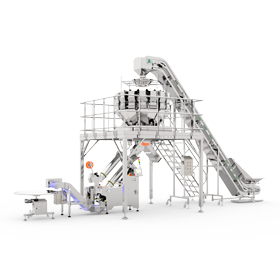
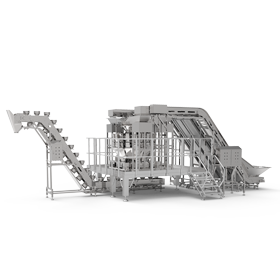
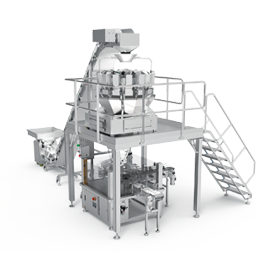
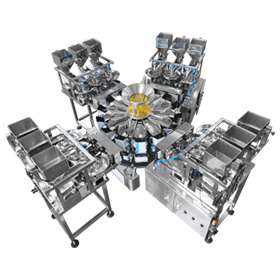
In the competitive global food manufacturing industry, a high-performance food packaging machine is far more than a piece of production equipment—it’s your core tool to guarantee food safety, cut operational costs, extend product shelf life, and win retail buyer trust.
Whether you run a small artisanal bakery, a mid-sized ready meal factory, or a large-scale frozen food production line, choosing the wrong food packaging equipment leads to costly downtime, product waste, non-compliance fines, and lost revenue. In this comprehensive guide, we break down everything food manufacturers need to know: from industry-standard machine types and use cases, to 8 critical selection criteria, maintenance best practices, and 2026 trends to future-proof your operations.
What Is a Food Packaging Machine &
Why It Matters for Your Business
A food packaging machine is specialized, food-grade industrial equipment designed to automate full or partial packaging workflows for food products—including forming, filling, sealing, wrapping, labeling, and coding. Unlike generic packaging machinery, food-grade models are built to meet strict global food safety regulations, with contamination-resistant designs and food-safe contact materials.
For food businesses of all sizes, investing in a fit-for-purpose food packaging machine delivers irreplaceable, bottom-line benefits:
·Guaranteed regulatory compliance:
Eliminates manual contact risks, meets FDA, EFSA, BRCGS, and SQF food safety mandates, and supports full batch traceability
·Dramatic food waste reduction:
Advanced vacuum and modified atmosphere designs extend product shelf life by 3–10x, cutting spoilage and returns
·Massive efficiency gains:
Automates repetitive packaging tasks, reducing manual labor costs by up to 80% and boosting output by 2–10x vs. manual packaging
·Consistent brand quality:
Delivers uniform, retail-ready packaging across every batch, strengthening buyer loyalty and retail shelf appeal
·Lower material costs:
Precision-controlled operation minimizes excess film, pouch, and tray waste, while supporting cost-effective sustainable packaging formats
Most Popular Types of Food Packaging Machines
Food products vary widely in texture, perishability, and packaging requirements—there is no one-size-fits-all food packaging machine. Below are the industry-standard types, with their ideal use cases and compatible products, to help you narrow your options.
·Key benefit: High-speed production, minimal material waste, and compatibility with stand-up pouches, zipper bags, and 3-side seal formats
Vacuum Food Packaging Machines
Vacuum packaging machines remove all air from the package before creating an airtight seal, inhibiting the growth of aerobic bacteria and mold. This is the global gold standard for preserving perishable food freshness and flavor.
·Ideal for: Fresh and processed meats, seafood, cheese, cured goods, nuts, and ready-to-eat meals
·Key benefit: Extends shelf life by 3–5x, eliminates freezer burn, and preserves product texture and taste without artificial preservatives
Modified Atmosphere Packaging (MAP) Machines
MAP machines replace ambient air inside packages with a calibrated gas blend (carbon dioxide, nitrogen, and oxygen) tailored to your specific product. This slows spoilage while maintaining the natural color, texture, and freshness of perishable foods.
·Key benefit: Retail-ready appearance, preservative-free freshness, and extended shelf life for long-distance distribution
Pouch Filling & Sealing Machines
These specialized machines fill pre-made stand-up pouches, zipper bags, and sachets with liquid, semi-liquid, powder, or solid food products, then create a secure, leak-proof seal. They range from semi-automatic models for small businesses to fully automated lines for high-volume production.
·Key benefit: Compatible with pre-printed branded pouches, high filling accuracy, and minimal changeover time between SKUs
Tray Sealing Machines
Tray sealing machines bond a lid film to pre-formed plastic, paper, or aluminum trays, creating a tamper-evident, leak-proof seal. Most models can be upgraded with vacuum or MAP functionality for enhanced freshness preservation.
·Key benefit: Perfect for retail-ready packaging, seamless integration with existing production lines, and support for sustainable paper-based trays
Flow Wrapping Machines
Also called horizontal wrapping machines, flow wrappers wrap individual or grouped food products in flexible film, creating a tight, sealed package with a horizontal fin seal. They are optimized for ultra-high-speed, continuous production.
·Ideal for: Bakery goods, chocolate bars, candy, energy bars, fresh produce, and individual snack items
·Key benefit: Production speeds up to hundreds of packages per minute, low material costs, and consistent packaging quality
Liquid & Semi-Liquid Food Packaging Machines
Engineered for high-precision filling of viscous, liquid, and semi-liquid products, these machines eliminate leaks, drips, and product waste. They support a wide range of formats, from bottles and jars to pouches and sachets.
·Key benefit: ±0.5% filling accuracy, handles a full range of viscosities, and meets strict hygiene standards for liquid food products
How to Choose the Right Food Packaging Machine:
8 Expert-Backed Criteria
Selecting the wrong food packaging machine can lead to years of costly downtime and production bottlenecks. Use these 8 critical factors to find a solution that aligns with your current and long-term business needs.
1. Your Product’s Core Characteristics
The single most important factor is your product itself. A machine optimized for dry snacks will fail for liquid sauces or frozen meat. Start by defining:
·Product texture: solid, powder, liquid, semi-liquid, viscous, or irregularly shaped
·Product temperature: ambient, chilled, frozen, or hot-fill
·Perishability level: shelf-stable, perishable, or ultra-perishable
·Special requirements: acidic, high-fat, or particle-filled products that need corrosion-resistant materials
2. Production Capacity & Line Compatibility
Match the machine’s output speed to your current and projected production volume:
·Semi-automatic food packaging machines: 5–30 packages per minute, ideal for small businesses and high-SKU, low-volume production
·Fully automatic food packaging machines: 30–300+ packages per minute, designed for mid-to-large scale production with full line integrationAlways confirm the machine can integrate seamlessly with your existing upstream/downstream equipment (fillers, labelers, coders) to avoid costly retrofits.
3. Sustainable Packaging Material Compatibility
Sustainable packaging is no longer a trend—it’s a regulatory requirement in 2026. Many older machines cannot handle thin, compostable, or paper-based materials without jams or poor seals. Prioritize machines that:
·Are compatible with your current packaging materials (plastic film, paper, aluminum, compostable films)
·Can adapt to future sustainable formats to avoid costly equipment replacements
·Deliver consistent, leak-proof seals with eco-friendly, thin-gauge materials
4. Automation Level & Labor Cost Savings
The right automation level balances your upfront budget and long-term operational costs:
·Semi-automatic: Low upfront cost, ideal for small businesses with limited production volume
·Fully automatic: Higher upfront investment, but reduces manual labor reliance and delivers a strong ROI within 1–3 years for mid-to-large producers
·Smart automated: Industry 4.0-enabled models with IoT monitoring and predictive maintenance for maximum uptime
5. After-Sales Support & Spare Parts Availability
Unplanned downtime for food manufacturers can cost thousands of dollars per hour. Always choose a supplier that offers:
·24/7 technical support for your region
·On-site installation, operator training, and maintenance services
·Readily available spare parts with fast shipping to your facility
·A local service team or authorized partner in your target market
6. Facility Layout & Utility Requirements
Before purchasing, confirm:
·The machine fits your available floor space, with clearance for operation, maintenance, and material loading
·Your facility has the required power supply, compressed air, and water connections
·Compact, tabletop, or modular models are available for small businesses with limited space
7. Total Cost of Ownership (TCO) vs. Upfront Price
Never choose a machine based solely on upfront cost. Calculate the full TCO over the machine’s lifespan, including:
·Energy and utility costs
·Maintenance and spare parts expenses
·Labor requirements for operation and cleaning
·Packaging material waste costs
·Expected lifespan and resale value
Pro Maintenance Tips to Maximize Your Food Packaging Machine Uptime & Lifespan
Proactive maintenance is the only way to minimize unplanned downtime, ensure food safety, and extend your machine’s service life by 5–10 years. Follow these food-grade equipment best practices:
1.Daily pre-operation inspection routine
Before every production run, inspect for worn seals, loose belts, damaged cutting blades, and leaks. Test emergency stop buttons, confirm all safety guards are in place, and verify all product-contact surfaces are fully sanitized.
2.Strict food-safe cleaning protocols
Follow the manufacturer’s cleaning guidelines, using only food-safe, non-corrosive cleaning agents. For high-risk products (meat, dairy, ready meals), implement CIP/SIP cleaning cycles between production runs to eliminate cross-contamination risks.
Regular lubrication reduces friction and wear, but never use generic industrial lubricants on food packaging machines. Only use NSF H1-rated food-grade lubricants, and follow the manufacturer’s recommended schedule and dosage.
4.Preventive wear part replacement
Seals, gaskets, cutting blades, belts, and heating elements are consumable parts. Keep critical spare parts in stock, and replace them according to the recommended schedule—not just when they fail. This eliminates 70% of unplanned downtime.
5.Comprehensive operator training
Most machine breakdowns stem from improper operation, not equipment defects. Train all operators on correct setup, operation, cleaning, and basic troubleshooting, so they can identify and resolve minor issues before they escalate.
6.Annual professional servicing
Have a certified technician perform a full annual service, including hard-to-reach component inspections, sensor and filling system calibration, software updates, and hidden issue identification.
2026 Food Packaging Machine Trends to Future-Proof Your Business
The food packaging industry is evolving rapidly, driven by regulatory changes, consumer demand, and technological advancements. Investing in a machine that aligns with these trends will keep your operations competitive and compliant for years to come.
Sustainable & Circular Packaging Compatibility
Global regulations (including the EU’s PPWR and US state-level plastic bans) are mandating reduced plastic use and increased recyclability. The most in-demand machines in 2026 are those that handle paper-based packaging, compostable films, mono-material recyclable plastics, and refillable formats with minimal changeover time.
Smart Industry 4.0 Automation
IoT-enabled food packaging machines are now the standard for mid-to-large manufacturers. These models offer real-time production monitoring, remote troubleshooting, predictive maintenance, and automatic setting adjustments for different products/materials, reducing downtime by up to 40% and supporting full batch traceability.
Integrated Food Safety Inspection
Modern machines now include built-in AI-powered visual inspection systems to detect seal defects, product contamination, and packaging errors in real time. Many also integrate metal detection, X-ray inspection, and tamper-evident sealing, eliminating the need for separate inspection equipment.
Flexible Multi-Functional Design
SKU proliferation is accelerating as food brands launch niche, personalized products. 2026’s top machines prioritize fast changeover (under 10 minutes) between packaging formats, product types, and SKUs, eliminating the need for multiple single-purpose machines.
Energy & Resource Efficiency
Rising global energy costs are driving demand for low-energy food packaging machines. New models feature energy-efficient heating elements, variable-speed drives, and optimized material usage, cutting energy consumption by up to 30% and reducing your operational carbon footprint.
Final Thoughts
A high-quality food packaging machine is the foundation of a profitable, compliant, and scalable food manufacturing business. By aligning your machine choice with your product needs, production volume, regulatory requirements, and long-term business goals, you’ll minimize downtime, reduce costs, and build a strong competitive advantage in the global food market.
At [Your Brand Name], we design and manufacture industry-leading, food-grade packaging machines for food businesses of all sizes, with global after-sales support and custom solutions tailored to your unique production needs.
FAQ: Common Questions About Food Packaging Machines
What is the best food packaging machine for small businesses?
For small food businesses, semi-automatic vacuum packaging machines, tabletop pouch fillers, and compact VFFS machines are the best options. They offer a low upfront cost, small footprint, and flexible production for low-to-mid volume, high-SKU operations.
How much does an industrial food packaging machine cost?
In 2026, semi-automatic food packaging machines start at $3,000–$15,000, while fully automatic industrial models range from $20,000–$150,000+. Custom high-speed lines for large-scale production can cost $200,000+. The final price depends on automation level, features, material compatibility, and production speed.
What is the difference between a food packaging machine and generic packaging equipment?
Food packaging machines are built with food-grade, non-toxic materials for all product-contact parts, meet strict global food safety regulations, and include specialized cleaning and contamination-prevention features. Generic packaging equipment is not designed for food contact, and cannot comply with food manufacturing regulatory requirements.
Which food packaging machine is best for extending product shelf life?
Vacuum packaging machines and MAP (modified atmosphere packaging) machines are the most effective for extending food shelf life. Vacuum packaging is ideal for cured meats, cheese, and frozen products, while MAP packaging is best for fresh produce, ready meals, and products that need to retain their natural appearance.
Can a food packaging machine handle multiple product types?
Yes, modern flexible food packaging machines can handle multiple product types and packaging formats, as long as they are equipped with quick-change parts and adjustable settings. Multi-functional machines with fast changeover capabilities are ideal for food brands with a wide range of SKUs.
In the competitive global food manufacturing industry, a high-performance food packaging machine is far more than a piece of production equipment—it’s your core tool to guarantee food safety, cut operational costs, extend product shelf life, and win retail buyer trust.Whether you run a small artisan
This comprehensive guide will walk you through every major conveyor belt material, their key properties and industry applications, and a practical step-by-step selection framework to help you make the most informed decision for your operation.
When we arrived in Algiers, the air carried the scent of the Mediterranean, mixed with a strange aroma of mint tea and grilled meat. It was my first time in Africa, and our company’s first time participating in the Plast&Printpack Alger exhibition.
It is a high-tech enterprise specializing in the R&D, design, and independent manufacturing of packaging, conveying, weight detection, weighing, and filling equipment.