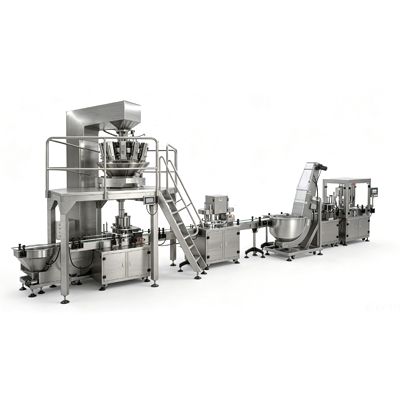
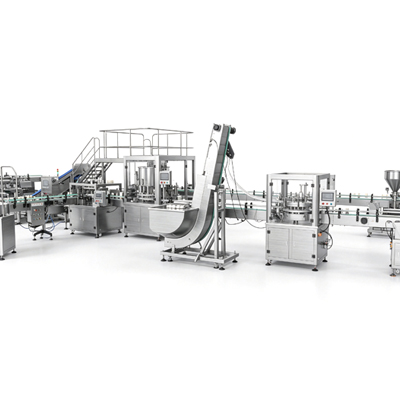
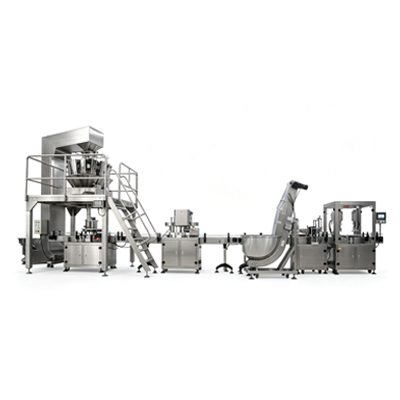
Linear Filling Machine (LS-CZS Series) — One Line for Every Liquid, from Water-Thin to Oil-Thick, Filled at ±1%
Product giveaway, 45-minute changeovers, viscosity surprises — three silent taxes on your margin. This is the line that repeals them.
Industry Pain Points
Be honest — how many of these are happening on your floor right now?
The "safety overfill" tax. Your filler drifts, so operators add 2–3 g per bottle to avoid underfill complaints. At 20,000 bottles/day, you're donating 40–60 kg of product daily — for free.
The changeover black hole. Switching from 100 ml to 1 L shouldn't take wrenches, shims, and 45 minutes of dead conveyor. Every minute of that is OEE you already paid for in salaries.
The winter viscosity surprise. Cold oil thickens, gravity fillers starve, fills come in short — and your rework bench becomes your most expensive workstation.
The multi-SKU Friday. Detergent at 9 a.m., shampoo at noon, edible oil at 3 p.m. — on a machine never designed for fast, clean teardowns between runs.
The Solution
Buyers often ask us: "linear filling machine vs rotary filling machine — which is better?" Here's the honest engineering answer: rotary wins for single-SKU mega-factories. But if you run 10–30 SKUs, change formats weekly, and target 600–5,000 bottles/hour, linear architecture wins on flexibility, footprint, and capex.
The LS-CZS linear filling line is built around the only three numbers that matter when you're researching how to choose a linear filling machine for edible oil — or any liquid:
Filling accuracy (±1%, piston or quantitative gravity, matched to your material);
Changeover time (tool-less, minutes not shifts);
Viscosity window (0.04–3 Pa·s, extendable with heating).
Single-head or simultaneous multi-head filling, 4–16 nozzles, one compact stainless frame. The result: less giveaway, more uptime, and an OEE figure your production manager will actually defend in Monday meetings.
Core Advantages
1. ±1% Volumetric Precision — Bottle After Bottle
Feature: Servo-controlled piston valves (4–16 heads) with anti-drip nozzles.
Advantage: Holds ±1% accuracy across the entire 100–2000 ml range, thin or viscous.
Benefit: The "safety overfill" tax disappears. On a 20,000-bottle/day oil line, the machine pays for itself in months — and net-content audits become a non-event.
Advantage: Swap 100 ml → 2000 ml formats without shims or re-alignment.
Benefit: Add two or more SKU runs per week. Small orders turn profitable; OEE climbs without buying a second machine.
3. Viscosity-Proof, Season-Proof
Feature: 0.04–3 Pa·s working window, 10–75 °C product temperature, optional jacketed hopper + heated nozzles.
Advantage: Draws cold lubricating oil, syrup, and grease-grade semi-fluids without starving or dripping.
Benefit: Identical fill weights in January and July. No seasonal rework, no winter downtime. (This is our standard answer to "what is the best filling machine for high viscosity grease": piston + heat + agitation.)
4. Built to Pass Audits, Built to Outlast Budgets
Feature: SUS304/316L product-contact parts, CE & ISO certified, sealed industrial electrics.
Advantage: Food-grade hygiene and real corrosion resistance against detergents and chemicals.
Benefit: Walk into FDA/HACCP/BRC-style audits with confidence, and lower total cost of ownership over a 10-year asset life.
Application Scenarios
Scene 1 — Edible Oil & Condiments. A 6-head line runs as a linear filling machine for cooking oil bottles at 2,500 bph in the morning, then re-tools in 15 minutes into a food grade linear filling machine for syrup and soy sauce after lunch. Spice producers use the same platform as a linear filling machine for spice oil and chili oil, where every gram of premium capsaicin oil counts. One linear filling machine for edible oil, 100ml–2000ml, no major part swaps.
Scene 2 — Lubricants & Chemicals. With a heated hopper, the line serves as a linear filling machine for lubricating oil and grease-grade semi-fluids for blenders packing 1L motor-oil bottles; swap to corrosion-resistant seals and it becomes a linear filling machine for chemical detergent liquids — bleach, surfactants, cleaners — without flinching.
Scene 3 — Cosmetics, Wine & Beverages. As a viscous liquid linear filling machine for shampoo and lotion, it handles shear-sensitive emulsions gently; configured with soft gravity fill, it works as a linear wine bottle filling machine for winery bottling that protects clarity and cork-line headspace; and as an 8 head linear filling machine for mineral water and liquor, it simply runs all day at speed.
Technical Specifications
Parameter
LS-CZS-8/J-600-V01
Production Capacity
600 – 5,000 bottles/hour (head-count dependent)
Filling Range
100 – 2,000 ml
Filling Valve Heads
4 – 16 (configurable)
Filling Accuracy
±1%
Applicable Viscosity
0.04 – 3 Pa·s (extendable with heating)
Product Temperature
10 – 75 °C
Air Consumption / Pressure
0.6 m³/min · 0.6 – 0.9 MPa
Power
2.42 kW
Power Supply
380V 50Hz (customizable 220–480V, 50/60Hz)
Net Weight
400 – 600 kg
Quality & After-Sales
Buying from a direct linear liquid filling machine manufacturer — not a trading company — means factory pricing and engineering depth. As a linear piston filling machine supplier and linear filling machine factory in China for viscous oil applications, we stand behind every frame:
CE & ISO 9001 certified; SUS304/316L product-contact parts as standard.
12-month warranty + lifetime technical support.
Free wear-part starter kit ships with every machine;
24-hour response, video commissioning, remote diagnostics; on-site engineers available.
FAQ
Q1: How much does a linear filling machine cost?
It scales with head count (4–16), filling method (piston vs. gravity), and options like heated hoppers. As a direct manufacturer we quote FOB within 24 hours — no middleman markup. Request the automatic linear filling machine price sheet below.
Q2: Can a linear filling machine fill 100ml to 2000ml bottles?
Yes — on the same conveyor. The tool-less rail and telescoping heads handle the full range; only minor format parts change.
Q3: How accurate is a linear piston filling machine over a full shift?
±1%, verified at commissioning. Piston metering is volume-based, so accuracy holds as product temperature and head pressure fluctuate.
Q4: What is the best filling machine for high viscosity grease?
A piston filler with heated, agitated hopper. Within 3 Pa·s it's standard; beyond that, we custom-engineer valve size and hopper design for your material.
Q5: Voltage, lead time, and wear parts?
Standard 380V/50Hz; we build for 220–480V, 50/60Hz to match your plant. Lead time 30–45 days; wear-part kit included, spares shipped within 48 h for the machine's lifetime.
Stop Funding Giveaway and Downtime
Send us three things — bottle size, product viscosity, target speed. Within 24 hours you'll receive: recommended head count, CAD layout, the automatic linear filling machine price sheet, and lead time. This linear filling machine for sale is configured around your product — not the other way around.
[Get Free Customization Quote] · WhatsApp · Live Video Factory Tour
20 YEARS Focus on
Poviding intelligent weighing
and packaging solutions
Product Description
Submit Your Requirements
Please submit your requirement form, and we will customize the most suitable solution according to your needs.
Automated mesh bagging extends produce shelf life by providing vital airflow. Upgrading your line slashes labor costs, stops product giveaway, and maximizes daily output.
Dust-controlled powder fillers use vacuum extraction and servo-driven augers to package fine materials. These automated systems prevent waste, ensure safety, and maximize ROI.
Horizontal packaging machines use lateral movement to safely package solids, powders, and liquids. These systems ensure leak-proof seals, cut labor costs, and maximize your ROI.
It is a high-tech enterprise specializing in the R&D, design, and independent manufacturing of packaging, conveying, weight detection, weighing, and filling equipment.