In modern manufacturing facilities, a scale does much more than merely weigh products. It acts as the data-driven heartbeat of the entire production line. Plant managers and quality assurance directors increasingly rely on this continuous stream of information to halt waste before it impacts the bottom line. Historically, end-of-line inspection was viewed simply as a compliance hurdle. Today, advanced inline weighing systems capture everything from micro-fluctuations in individual package weights to macro-level plant efficiency metrics.
By diving deep into the analytics provided by these machines, decision-makers shift their operations from reactive troubleshooting to proactive process optimization. In this technical breakdown, we will examine exactly what data these systems track. More importantly, we will explore how engineers and plant managers leverage those insights to maximize return on investment.
Key Takeaways
Real-Time Weight Precision: Advanced weighing systems track individual product weights, batch averages, and standard deviations in real-time to prevent underfilling and overfilling.
Operational Efficiency: Beyond basic weight metrics, these systems monitor throughput in packages per minute, reject rates, and machine uptime to pinpoint line bottlenecks.
Regulatory Compliance: Modern inspection equipment logs immutable audit trails, user access data, and calibration records to meet strict industry standards like FDA 21 CFR Part 11.
Seamless Integration: Production data exports directly to ERP, MES, and SCADA systems for plant-wide visibility and rapid decision-making.
The Evolution of Weight Inspection: From Sorting to Data Hub
The Shift in Manufacturing Practices
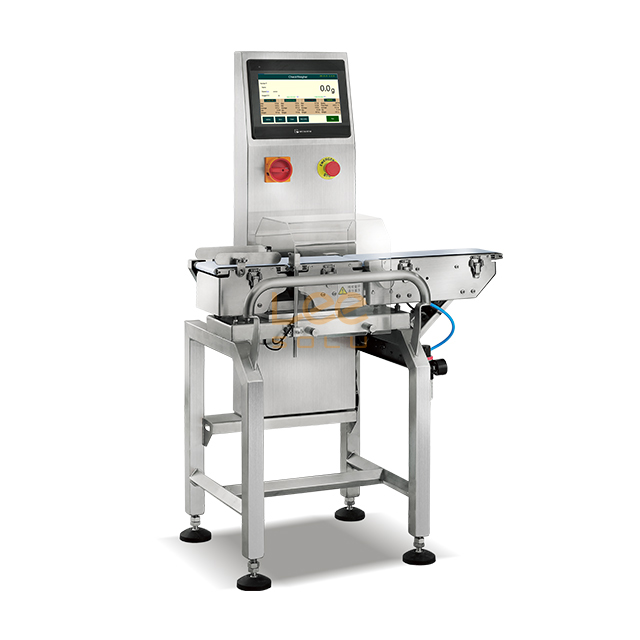
Consider a standard packaging line from a decade ago. An operator manually pulled a box off the conveyor, weighed it on a static scale, logged the number on a clipboard, and returned the product to the line. This fractional sampling method provided only a blurry, isolated snapshot of production quality. Today, that labor-intensive process has been largely replaced by dynamic automatic checkweigher systems. Engineered to weigh products while they remain in continuous motion, these advanced machines transform the humble scale into a comprehensive data collection hub.
Industry Trends: The Move Toward Predictive Analytics
Looking at recent industry trends, the role of weight inspection has fundamentally shifted toward predictive analytics. Current manufacturing intelligence reports show facilities rapidly adopting Industrial Internet of Things frameworks. Simple pass or fail metrics are no longer sufficient. Forward-thinking plant managers now leverage continuous data streams to predict mechanical degradation days before an actual breakdown occurs. A subtle shift in package weight variance might indicate a worn auger or a leaking filler valve. This transition from basic sorting to proactive equipment health monitoring represents a major leap forward in lean manufacturing.
The Power of Dynamic Data
Capturing data while products move at high speeds allows for complete inline inspection without compromising throughput. Modern electromagnetic force restoration load cells, combined with digital signal processing, filter out environmental vibrations. They capture precise weight readings in mere milliseconds. Consequently, every single unit is accounted for. This creates an unbroken stream of production metrics that forms the absolute foundation of robust quality control.
Core Weight Metrics Tracked on the Line
The foundation of any dynamic weighing system lies in its ability to capture and process fundamental weight metrics with absolute precision. This raw data drives all subsequent analytics.
Individual Product Weight
The primary data point captured is the exact gross weight of every single item passing over the weigh belt. Recorded in fractions of a second, the control system instantly compares this data against pre-programmed target weights. If a package falls outside the acceptable tolerances, the system immediately triggers a downstream rejection mechanism. This ensures non-compliant products never reach the consumer.
Average Batch and Shift Weight
While individual weights are critical for sorting, aggregate data is essential for high-level management. The machine continuously calculates the moving average weight over a specific time frame, batch, or production shift. Specifically, tracking the average batch weight ensures the overall production run complies with legal metrology requirements. Standards like the European Measuring Instruments Directive dictate that the average weight of a batch must not fall below the stated nominal weight.
Tare Weight Tracking
In industries where packaging materials fluctuate heavily, tracking the gross weight alone is insufficient. Glass jar manufacturing and heavy corrugated boxing are prime examples. To combat this variance, advanced systems utilize tare weight tracking. By integrating a secondary scale before the filling station, the system measures the empty container. It then digitally links that data to the filled container downstream. The machine calculates the exact net weight of the product, ensuring precise yield data even when packaging variables change.
Statistical Process Control Data for Quality Assurance
Modern weighing software utilizes complex mathematics and Statistical Process Control to predict and prevent errors before they result in costly product rejections. This is where raw data becomes actionable engineering intelligence.
Standard Deviation and Variance
Standard deviation is a statistical metric that tracks the consistency of the filling or packaging machine. In practical terms, it measures how tightly the individual product weights cluster around your target weight. A low standard deviation indicates a highly precise and stable filling process. Conversely, a high standard deviation means the filler is erratic and dispensing fluctuating amounts of product. By monitoring this variance, maintenance teams identify inconsistent product flow early. They can recalibrate equipment before a minor drift becomes a major disruption.
Product Giveaway Metrics
To avoid the legal penalties associated with underweight products, many manufacturers intentionally overfill their packages. However, this free product equates to direct financial loss. The weighing system tracks the exact amount of product giveaway in real-time, aggregating this data over the entire shift. By translating physical grams into lost revenue, quality assurance directors clearly see the financial impact of filler inaccuracies. They can then adjust their target weights accordingly to protect profit margins.
Weight Zones and Acceptable Quality Limits
Data is categorized into distinct weight zones to trigger specific software responses. For instance, an underweight zone represents a product critically below legal limits, triggering an immediate alarm and mechanical rejection. A target zone represents a perfect fill, where data is simply logged for average calculations. By tracking how many products fall into each specific zone, the system maintains strict adherence to your facility's Acceptable Quality Limits.
Production Efficiency and Throughput Data
Beyond strict weight compliance, a dynamic weight inspection machine acts as a continuous monitor for overall line performance and mechanical efficiency.
Throughput Speed Analytics
The system logs real-time production speeds, measuring the exact number of packages per minute crossing the belt. By comparing the actual throughput data against the theoretical maximum speed of the line, plant managers instantly identify hidden slowdowns. If a line designed for 150 packages per minute consistently registers 130, the data highlights an upstream bottleneck that requires immediate investigation.
Reject Rates and Root-Cause Sorting
Tracking the sheer volume of rejected items is helpful, but insufficient for root-cause analysis. Therefore, the system also logs the exact time and reason for every single rejection. Sorting analytics help pinpoint exactly when a malfunction occurred. If the data shows a sudden spike in overweight rejects at a specific hour, maintenance teams cross-reference this timestamp with shift changes, material changeovers, or temperature fluctuations to isolate the problem.
Overall Equipment Effectiveness Contributions
Overall Equipment Effectiveness is the gold standard for measuring manufacturing productivity. The data gathered here feeds directly into all three pillars of these calculations. First, the machine tracks its own uptime and downtime for equipment availability. Second, throughput data provides the exact speed metric required for performance grading. Finally, the ratio of accepted products to rejected products yields the definitive quality percentage.
Regulatory Compliance and Audit Trail Data
For manufacturers operating in the pharmaceutical, food and beverage, and chemical sectors, proving compliance to external auditors is not optional. It is a strict legal mandate.
Time and Date Stamping
Traceability is critical in modern manufacturing. Every single weight measurement, accepted product, and rejected item is logged with a precise, unalterable timestamp. In the event of a consumer complaint or a targeted product recall, manufacturers rapidly retrieve the historical data for that specific batch. This proves unequivocally that the products left the facility within legal weight parameters.
User Access and Modification Logs
To comply with stringent regulatory standards, the machine tracks comprehensive user access data. The software logs exactly who logged into the system, at what time, and what specific actions they performed. If an operator attempts to change a target weight parameter or disable an alarm, the system creates an immutable audit trail. This prevents unauthorized modifications and ensures total accountability on the production floor.
Calibration and Maintenance Records
A weighing system is only as reliable as its baseline calibration. The machine tracks its own operational health, logging the exact dates and times of manual calibration checks and automated zero-tracking routines. Furthermore, the system monitors the wear and tear on its mechanical components. It alerts operators with predictive maintenance warnings before a catastrophic failure occurs.
Integration: Connecting Checkweigher Data with Factory Systems
Gathering precise weight data is only the first step in modern quality assurance. The true value lies in how that data is communicated and utilized across the factory ecosystem. Today’s systems act as active network nodes, pushing actionable intelligence exactly where it is needed.
ERP and MES Integration
Enterprise Resource Planning and Manufacturing Execution Systems require accurate, real-time data to monitor plant-wide productivity. Advanced systems connect directly to these platforms, feeding them raw throughput numbers, reject ratios, and batch yield statistics. When integrated, corporate management views centralized dashboards comparing the performance of different production lines in real-time. This eliminates the manual transcription errors associated with paper logs.
Feedback Loops to Filling Machines
One of the most powerful data-driven features is the feedback loop, commonly referred to as trend control. Because the machine analyzes the moving average weight in milliseconds, it detects micro-trends in filling accuracy before they violate quality limits. If the data indicates that a volumetric filler is slowly drifting upward, the software sends a digital signal upstream. The filling machine then automatically adjusts its dosing mechanism downward, correcting the error without any human intervention.
Data Comparison: Static vs. Dynamic Weighing
To truly understand the value of an automated system, engineers often compare it against traditional manual methods. The difference in data quality and operational impact is substantial.
Feature
Static Scale Sampling
Dynamic Automatic Checkweigher
Data Volume
Fractional sampling. Only a small percentage of products are recorded.
100% inline inspection. Every single unit is weighed and logged.
Line Disruption
High. Operators must remove products, stopping or slowing workflow.
None. Products are weighed continuously at full line speeds.
SPC Capabilities
Delayed and manual. Trends are often noticed after rejects occur.
Real-time. Automated trend control adjusts upstream fillers instantly.
Human Error Risk
High risk of transcription errors or missed sampling intervals.
Zero risk. Data logging is entirely automated and immutable.
Leveraging Checkweigher Data to Maximize Your ROI
Investing in capital equipment requires a clear, measurable path to return on investment. Fortunately, the data tracked by these systems directly correlates to massive financial savings on the factory floor.
Eliminating Costly Product Giveaway
Product giveaway is a silent drain on manufacturing profitability. While an extra gram or two per package seems negligible to an operator on the floor, the cumulative financial loss over a fiscal year is staggering. Consider a facility packaging coffee beans running at 120 packages per minute across two shifts. By utilizing Statistical Process Control data and trend control feedback loops to tighten the standard deviation, the manufacturer might reduce their average overfill by just 1.5 grams per package. Over a year of continuous production, that tiny adjustment saves tens of thousands of kilograms of product. This material saving often covers the initial cost of the equipment within a matter of months.
Preventing Underweight Fines and Recalls
On the opposite end of the spectrum, shipping underweight products violates consumer protection laws and carries severe legal risks. Regulatory bodies enforce strict net weight compliance laws. Violations result in exorbitant fines, mandated recalls, and permanent brand damage. The historical data logs maintained by the system serve as a legally defensible insurance policy. If a shipment is disputed, the quality assurance director instantly produces the audit trail, providing empirical proof of compliance at the exact time of production.
Choosing the Right Equipment for Your Data Needs
Selecting the correct equipment requires aligning the machine’s tracking capabilities with your facility's specific operational goals. Not all systems are engineered with the same analytical depth or mechanical precision.
Hardware Precision and Speed Matching
When evaluating an online checkweigher, engineers must match hardware capabilities to production speeds. For instance, high-precision models like the CW120 series offer dynamic weight inspection with exceptional accuracy, often reaching tolerances as tight as ±0.1 grams. These units handle high-speed lines effortlessly, processing hundreds of packages per minute without sacrificing data integrity. Ensure the load cell technology matches your exact product weight range to guarantee valid data collection.
Software and Connectivity Capabilities
Decision-makers should prioritize the human-machine interface and software architecture. Look for user-friendly, high-resolution touchscreens capable of displaying real-time histograms and control charts clearly. Additionally, ensure the system has robust internal data storage capacity. It must hold hundreds of different product recipes and millions of individual weight records. Verify that it supports the specific industrial communication protocols used by your plant's network, such as Modbus TCP or Ethernet IP.
Conclusion
An inline weighing system is far more than a simple sorting mechanism. It is a highly sophisticated data-gathering tool that protects your profits, ensures regulatory compliance, and optimizes overall line efficiency. By tracking real-time weights, standard deviations, and throughput analytics, manufacturers eliminate costly product giveaway and prevent mechanical bottlenecks. Ultimately, the data generated by these machines ensures that the equipment pays for itself over time. For facilities ready to upgrade their production analytics, exploring the comprehensive range of equipment at LeeSolu ensures you find the exact fit for your specific manufacturing line.
FAQ
Q: Can an automatic checkweigher track data in real-time?
A: Yes, modern systems process and display data in milliseconds. Advanced digital load cells capture the weight of moving items instantaneously. Operators view real-time statistical graphs, average batch weights, standard deviations, and reject rates directly on the interface screen as products pass over the weighing belt. This immediate data availability allows for rapid adjustments to the production line before significant errors occur.
Q: How long does a weight inspection machine store data?
A: This depends heavily on the machine's internal memory capacity and software configuration. Many industrial units store millions of individual weight records, audit trails, and batch reports locally on internal solid-state drives. Furthermore, by connecting the machine to your plant's network, data exports continuously. It can be stored indefinitely on external servers, ERP systems, or secure cloud databases for long-term historical analysis.
Q: How does checkweigher data improve filling machine accuracy?
A: Through a feature called trend control. The checkweigher continuously calculates the moving average weight of the products. If it detects that the weights are slowly trending upward or downward toward the tolerance limits, it sends a feedback signal to the upstream filling machine. The filler then automatically adjusts its dosing mechanism to bring the weights back to the exact target, preventing future rejects.
Q: What communication protocols do modern weight inspection machines use?
A: Industrial weighing systems are designed for seamless factory integration. They typically utilize standardized industrial communication protocols such as Modbus TCP, Ethernet IP, Profinet, and OPC UA. For simpler setups, they also offer standard TCP/IP network connections and USB ports for manual data extraction via CSV files.
Q: Can online checkweighers export data to Excel or ERP systems?
A: Absolutely. Most industrial weighing systems are designed with flexible connectivity in mind. They come equipped with USB ports allowing operators to perform simple CSV or Excel data exports for manual review. For automated environments, they feature Ethernet and Wi-Fi capabilities to feed data continuously into ERP, MES, or SCADA systems.
Q: What is the difference between static weighing data and dynamic checkweigher data?
A: Static weighing requires an operator to physically remove a product from the production line, stop its motion, and place it on a stationary scale. This method provides a very small, isolated data set and inherently slows down production. Dynamic data is gathered automatically while the product remains in motion on the conveyor belt. This allows for continuous inspection of every single product on the line, generating a comprehensive and highly accurate data set without interrupting manufacturing throughput.
Automated mesh bagging extends produce shelf life by providing vital airflow. Upgrading your line slashes labor costs, stops product giveaway, and maximizes daily output.
Dust-controlled powder fillers use vacuum extraction and servo-driven augers to package fine materials. These automated systems prevent waste, ensure safety, and maximize ROI.
Horizontal packaging machines use lateral movement to safely package solids, powders, and liquids. These systems ensure leak-proof seals, cut labor costs, and maximize your ROI.
It is a high-tech enterprise specializing in the R&D, design, and independent manufacturing of packaging, conveying, weight detection, weighing, and filling equipment.