1. Packaging Challenges in Fresh-Cut Fruit and Vegetable Processing
As demand for fresh-cut produce continues to grow across supermarkets, convenience stores, and ready-to-eat food markets, products such as diced mango, pineapple chunks, broccoli florets, and mixed vegetable salads are becoming increasingly popular.
However, scaling up fresh-cut fruit and vegetable production presents several challenges, particularly during weighing and tray filling.
Product damage and bruising: Soft fruit pieces and delicate vegetables can be damaged by excessive dropping or impact during conventional gravity-fed filling. High-moisture products such as mango and pineapple can also stick to weighing components, affecting weighing consistency and cleaning efficiency.
Inconsistent manual weighing: Manual portioning can lead to weighing variations, higher labor costs, and limited production capacity, making it difficult for processors to meet large-volume supermarket orders.
Inaccurate tray positioning and product spillage: If products are not accurately directed into trays, spillage and uneven filling may occur. Misaligned trays can also disrupt downstream lid closing and labeling operations, requiring additional manual handling.
Hygiene and equipment durability: Fruit juices and moisture can accelerate the deterioration of unsuitable conveyor materials. Food processors need equipment designed for frequent cleaning and the hygiene requirements of food production environments.
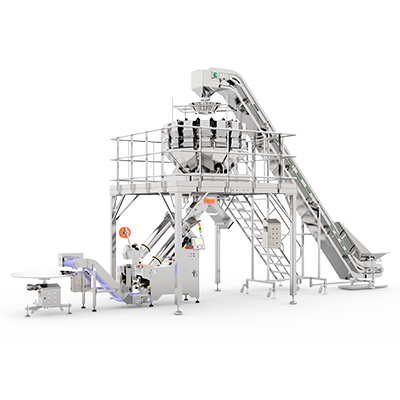
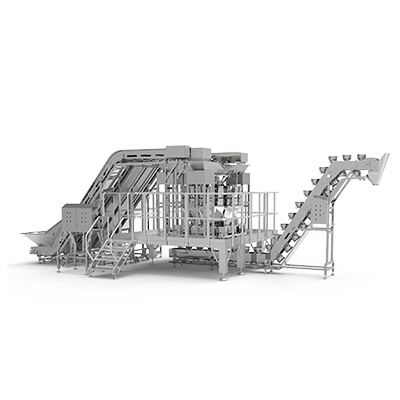
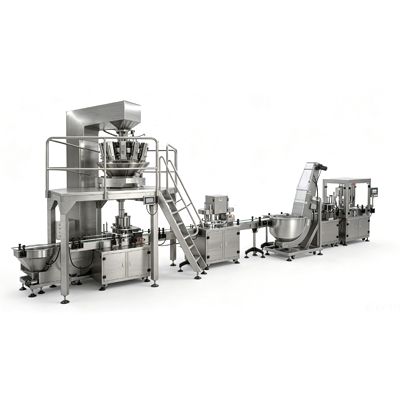
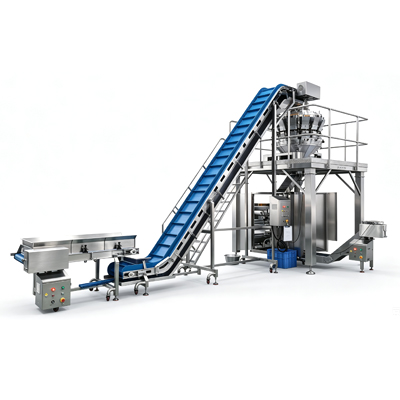
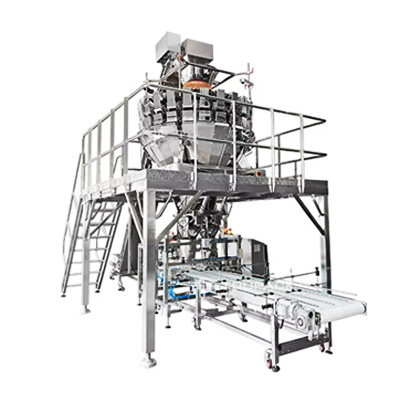
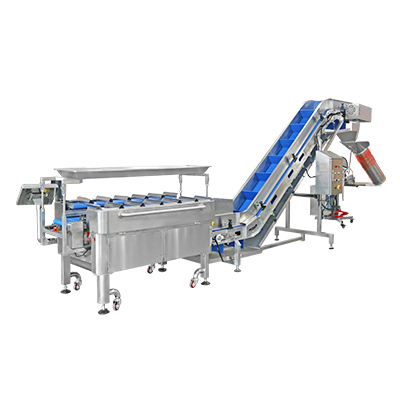
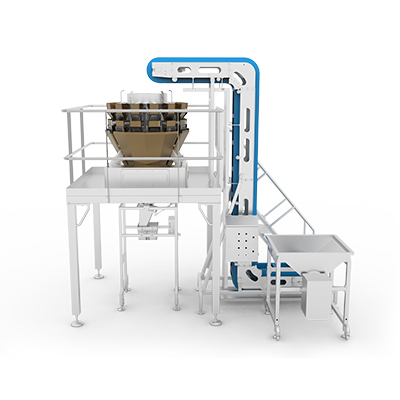
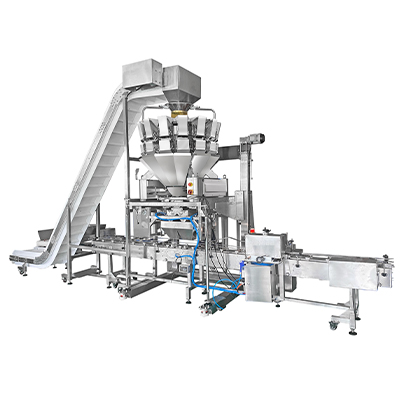
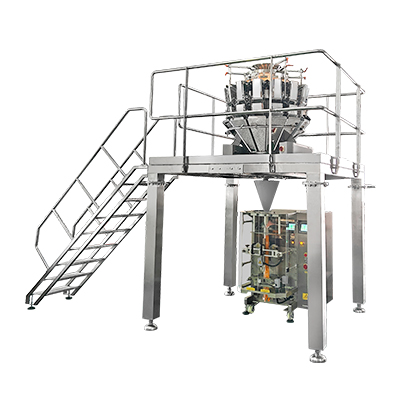
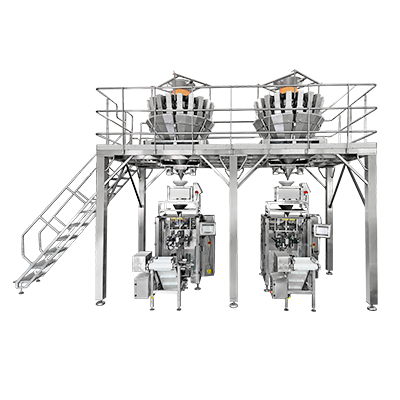
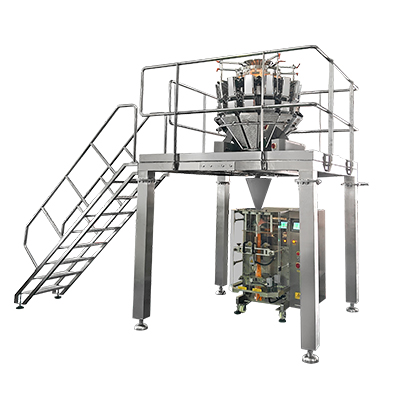
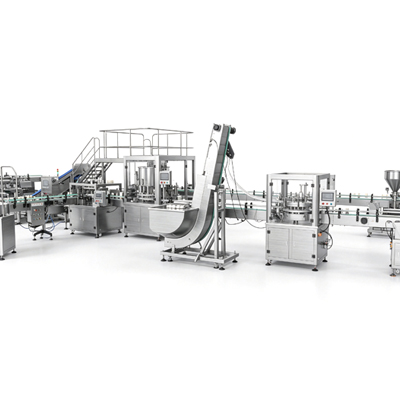
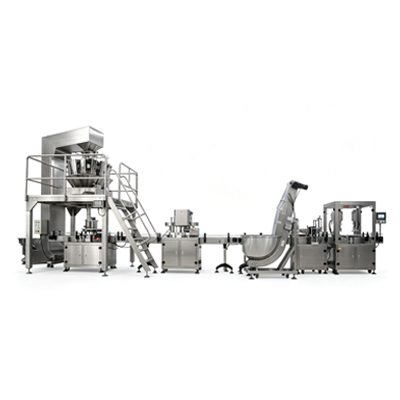
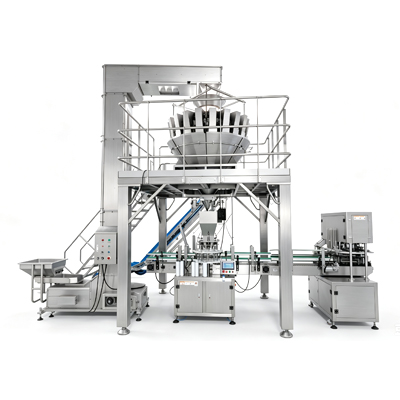
To address these challenges, LEESOLU has developed an automatic fresh-cut fruit and vegetable weighing and tray filling line. Combining feeding, multihead combination weighing, gentle product transfer, automatic tray denesting, tray closing, and conveying, the system is designed to improve portioning consistency while helping protect delicate produce.
2. Multihead Combination Weighing Technology for Fresh-Cut Produce
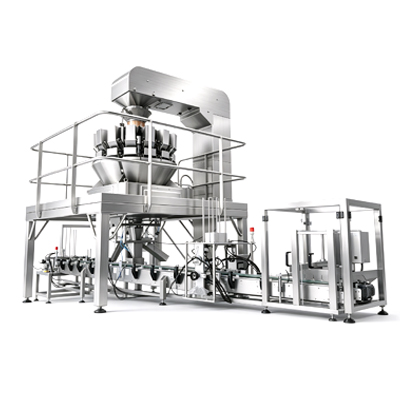
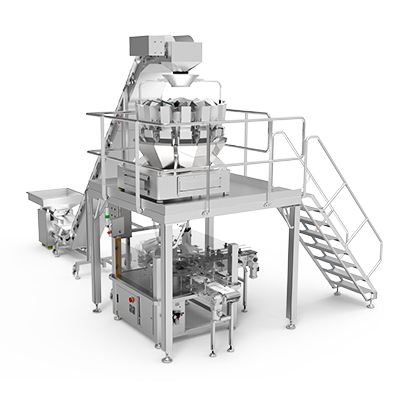
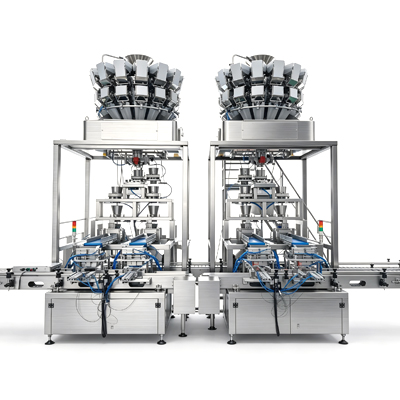
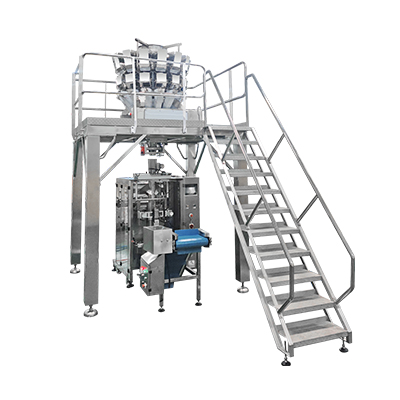
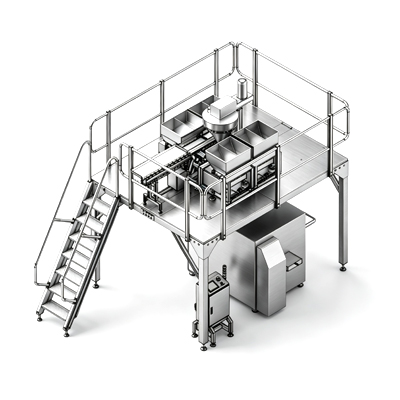
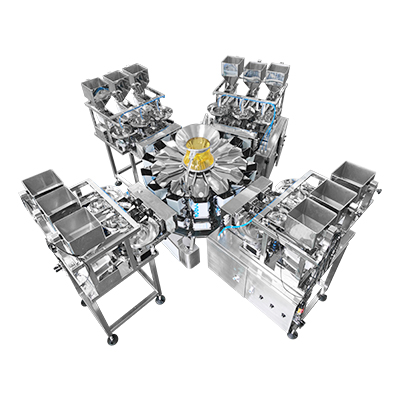
The core of the LEESOLU fresh-cut produce packaging line is a multihead belt combination weigher. Different configurations are available to accommodate varying product shapes, moisture levels, and packaging requirements.
8-Head, Three-Layer Combination Weigher for Diced Mango
Designed for diced mango and similar wet, chunky products, this configuration offers:
Target weighing range: 500–1,000 g per tray
Maximum operating speed: up to 40 trays per minute
Stated weighing deviation: ±5 g per tray
The three-layer configuration supports product distribution and combination weighing for fresh-cut fruit applications.
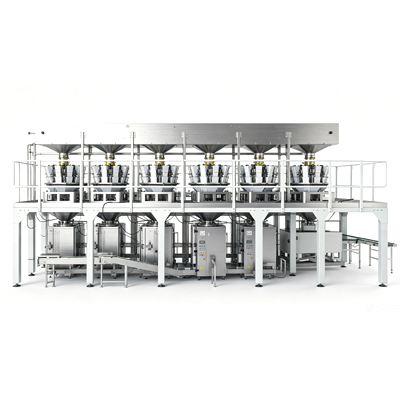
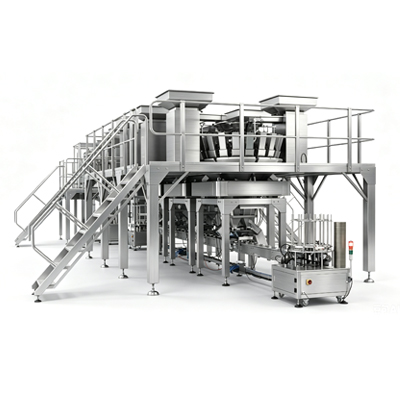
12-Head Belt Combination Weigher for Pineapple Strips
For elongated pineapple pieces and similar products, the 12-head belt combination weigher provides:
Target weighing range: 500–1,000 g per tray
Production speed: up to 30 trays per minute
The belt-based design supports the handling of elongated produce while enabling automated portioning and transfer into trays.
Actual performance depends on the product characteristics, target weight, tray format, and production conditions.
3. Gentle Product Handling to Reduce Damage and Spillage
Fresh-cut produce requires more than accurate weighing. Product appearance, texture, and presentation are also important to retailers and consumers.
LEESOLU incorporates several structural design features to address these requirements.
Food-Grade PU Conveyor Belts
The product-contact weighing belts use food-grade polyurethane (PU), selected for its resistance to water and fruit juices. Compared with conventional metal weighing hoppers, the belt-based structure is designed to reduce product adhesion and support easier cleaning.
Buffer belts are also incorporated between transfer points to help reduce impact and falling damage as produce moves through the system.
V-Shaped Collection Conveyor for Controlled Discharge
After individual weighing belts discharge their selected portions, a V-shaped collection conveyor guides the products toward the tray filling position.
The V-shaped channel helps center the product flow and maintain a more controlled transfer into the filling section. Combined with a V-shaped discharge outlet and tray-position sensing system, the design guides produce down an inclined surface rather than allowing it to fall vertically from a greater height.
According to the system's stated test results:
Tray-positioning deviation: ≤ ±5 mm
Product spillage: approaching zero under the tested conditions
These design features help reduce unnecessary impact, improve filling consistency, and minimize product loss.
Dual-Flap Discharge Mechanism
The dual-flap discharge mechanism opens both hopper flaps in synchronization to release the weighed portion into the tray in a controlled, coordinated action.
Together, the belt combination weigher, V-shaped collection conveyor, and controlled discharge structure help address the handling challenges associated with soft, wet, and delicate fresh-cut produce.
4. A Complete Automatic Tray Filling and Closing Line
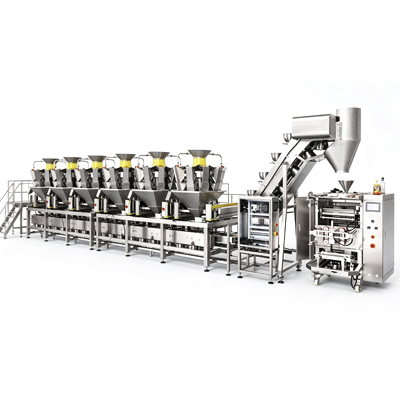
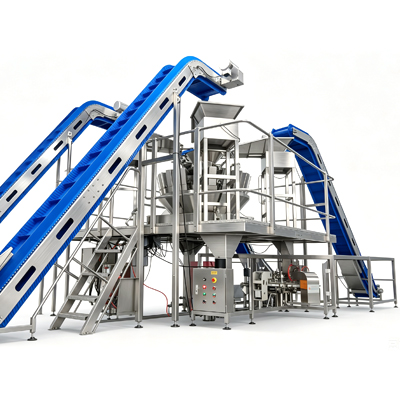
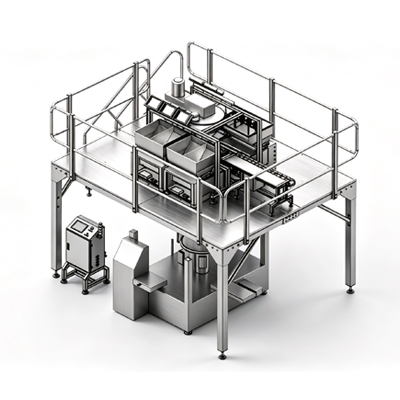
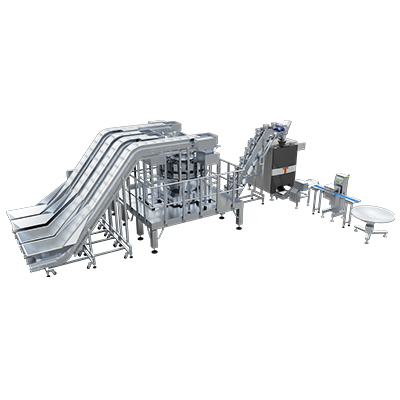
LEESOLU integrates upstream feeding equipment and downstream tray-handling modules to create a coordinated automatic packaging process.
The typical line includes the following equipment:
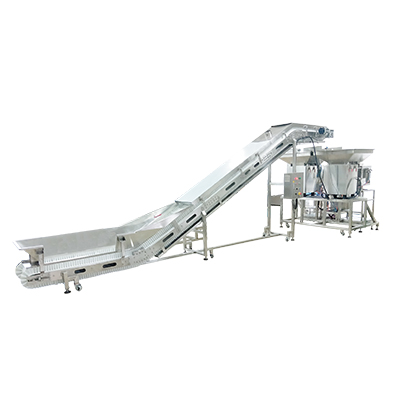
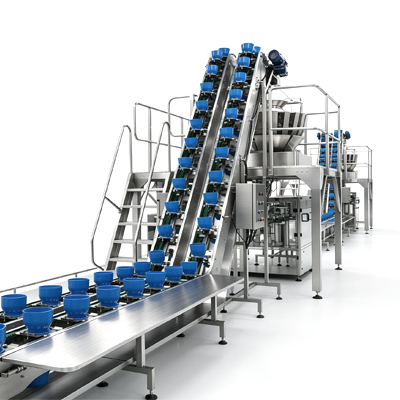
1. Inclined Elevator
Transfers pre-cut fruit and vegetables to the combination weigher, providing a continuous and stable product supply.
2. Multihead Belt Combination Weigher
Calculates weight combinations and discharges portions according to the target weight, supporting consistent portioning for different tray specifications.
3. Four-Station Tray Denester
Automatically separates empty plastic trays from a stacked supply and places them in position on the conveyor according to the production cycle.
4. Tray Closing Guide Mechanism
Guides the tray lid into position and applies light pressure to help achieve a flat, consistent closure.
5. Tray Pressing Wheels
Soft pressing wheels gently stabilize the trays and help prevent displacement during subsequent sealing and labeling operations.
Depending on the required configuration, the complete line can also incorporate weighing inspection, reject handling, labeling, and additional conveying equipment.
By coordinating these operations, LEESOLU helps reduce manual handling and improve the continuity of the fresh-cut produce packaging process.
5. Production Performance and Application Scenarios
The automatic fresh-cut fruit and vegetable weighing and tray filling line is designed for processors seeking to increase production capacity, reduce manual portioning, and improve product presentation.
Key stated performance indicators include:
Overall production capacity: up to more than 1,500 trays per hour
Staffing requirement: approximately 1–2 operators monitoring the line
Weighing configurations: 8-head and 12-head belt combination weighers
Target tray weight: 500–1,000 g for the configurations described above
The line uses gentle product transfer and cushioning structures to reduce impact during elevation, distribution, weighing, and filling. The original application test reported that product damage was reduced by more than 50% compared with manual portioning.
Actual output, labor requirements, weighing performance, and product damage rates depend on the material, tray specifications, operating conditions, and final line configuration.
Suitable Products
The system can be configured for a range of fresh-cut and ready-to-eat produce, including:
Diced fresh mango
Pineapple strips and chunks
Broccoli florets
Diced carrots
Cucumber pieces
Mixed fruit and vegetable salads
Sweet corn kernels
Shredded red cabbage
Suitable Customers
The line is particularly relevant to:
Fresh-cut produce processing plants
Central fresh food processing facilities
Fresh-cut fruit and vegetable manufacturers
Supermarket fresh food supply chains
Ready-to-eat fruit and vegetable producers
For businesses handling multiple product types and high-volume orders, automated weighing and tray filling can help standardize portioning, improve workflow consistency, and reduce reliance on manual labor.
6. Frequently Asked Questions About Fresh-Cut Produce Packaging
Q1: Will wet fruit pieces stick to the weighing system?
High-moisture products such as mango and pineapple can adhere to conventional weighing components. LEESOLU uses a belt-based weighing structure designed to reduce product adhesion compared with traditional metal hoppers. The PU belts also support cleaning and routine sanitation. Actual performance depends on the product's moisture content, surface condition, and operating environment.
Q2: Can the packaging line handle different fruits and vegetables?
Yes. The system can be configured for different product types and target weights. Recipe storage allows operators to select preset settings for products such as mango, pineapple, and mixed vegetables, helping simplify changeovers between SKUs. Product-specific testing is recommended to determine the most suitable weighing configuration and operating parameters.
Q3: Is the equipment easy to clean and maintain?
The machine body uses stainless steel, while food-contact components are designed for convenient disassembly and cleaning. The food-grade PU belts are selected for resistance to water and fruit juices. The final cleaning procedure should follow the equipment's operating instructions and the processor's food safety and sanitation requirements.
Q4: Can the line reduce product damage during weighing and filling?
The system combines belt-based weighing, buffer belts, a V-shaped collection conveyor, and controlled discharge to reduce unnecessary product impact. In the original application test, the product damage rate was reported to be more than 50% lower than with manual portioning. Results vary depending on product firmness, piece size, handling conditions, and production settings.
Q5: What is the production capacity of the fresh-cut fruit packaging line?
The described configurations offer operating speeds of up to 40 trays per minute for the 8-head, three-layer weigher and 30 trays per minute for the 12-head belt weigher. The complete line's stated production capacity is more than 1,500 trays per hour. The appropriate configuration should be selected according to product characteristics, target weight, tray size, and required output.
7. Conclusion: Flexible Automated Packaging for Fresh-Cut Produce
The main challenge in fresh-cut fruit and vegetable packaging is balancing weighing accuracy and production efficiency with the need to protect delicate products.
Rather than applying a standard dry-product packaging design, LEESOLU's fresh-cut produce weighing and tray filling line incorporates a belt combination weigher, controlled low-drop discharge, V-shaped product collection, and automated tray handling to address the specific characteristics of wet and delicate materials.
For fresh-cut produce processors looking to expand capacity, reduce manual portioning, and minimize product damage, a flexible multihead combination weighing and automatic tray filling line offers a practical approach to packaging automation.
Looking for a fresh-cut fruit and vegetable packaging solution? LEESOLU can help you evaluate the appropriate weighing configuration and line layout based on your product, target weight, tray format, and production requirements.
Automated mesh bagging extends produce shelf life by providing vital airflow. Upgrading your line slashes labor costs, stops product giveaway, and maximizes daily output.
Dust-controlled powder fillers use vacuum extraction and servo-driven augers to package fine materials. These automated systems prevent waste, ensure safety, and maximize ROI.
Horizontal packaging machines use lateral movement to safely package solids, powders, and liquids. These systems ensure leak-proof seals, cut labor costs, and maximize your ROI.
It is a high-tech enterprise specializing in the R&D, design, and independent manufacturing of packaging, conveying, weight detection, weighing, and filling equipment.