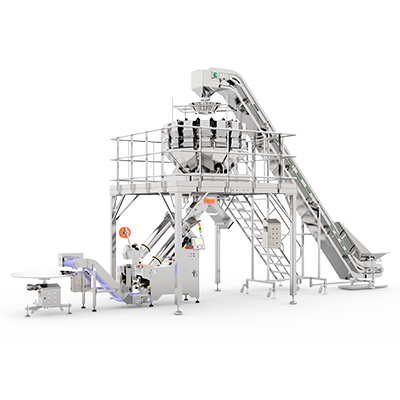
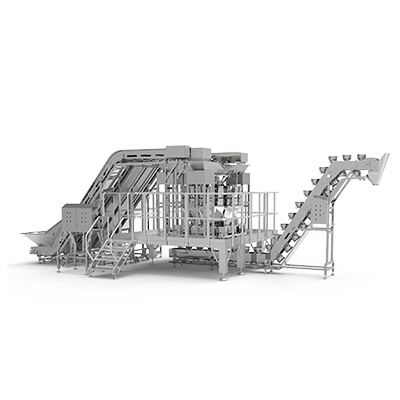
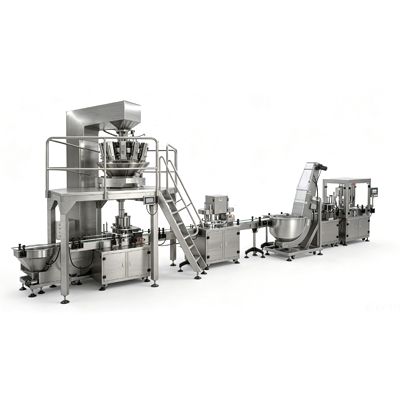
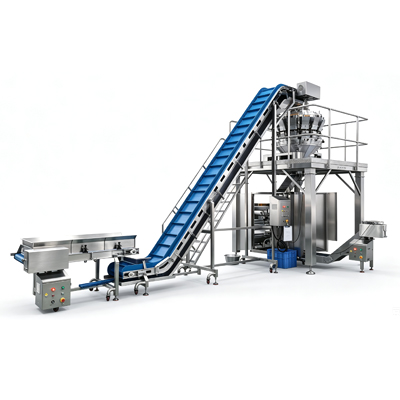
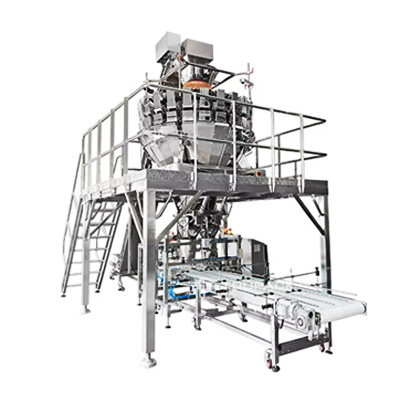
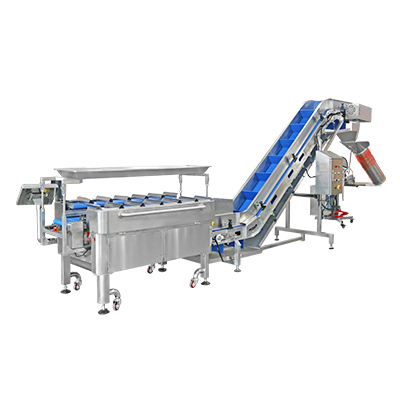
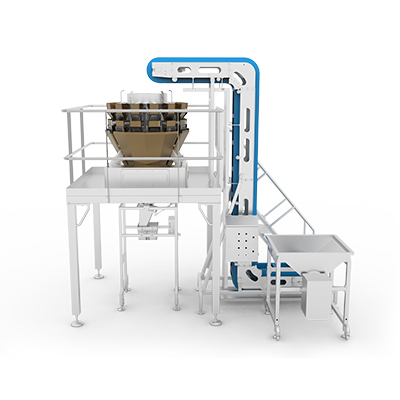
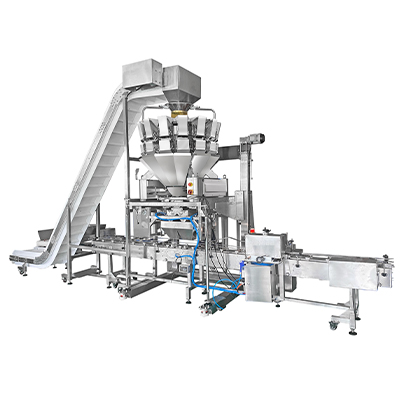
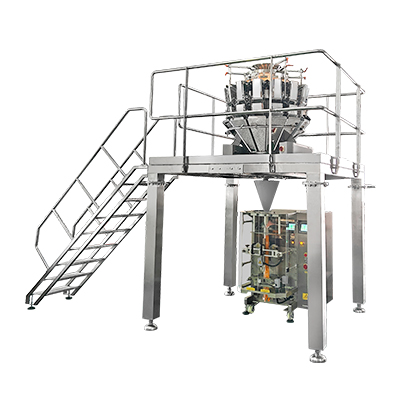
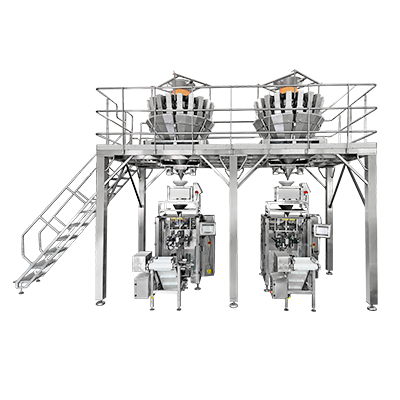
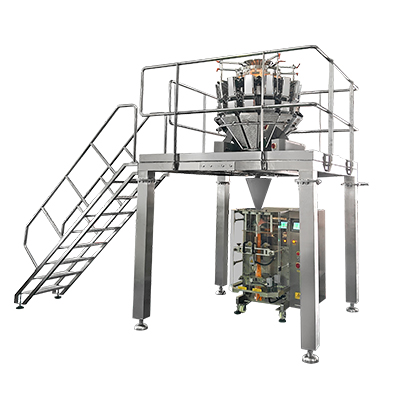
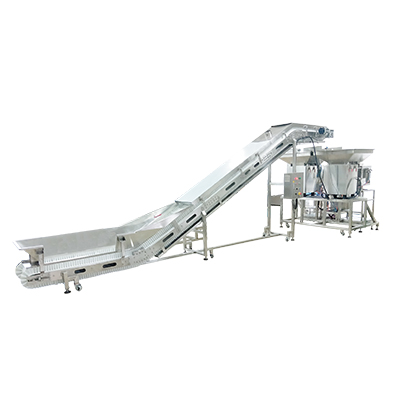
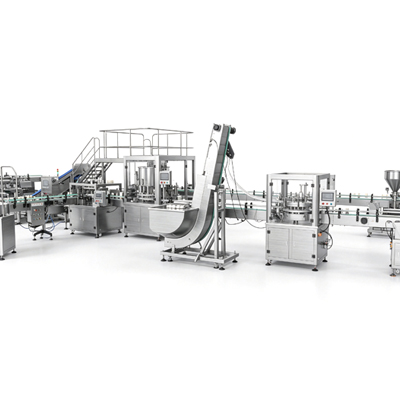
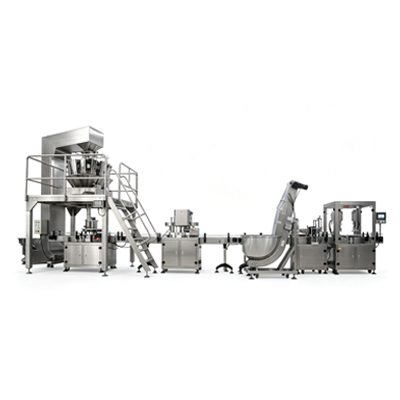
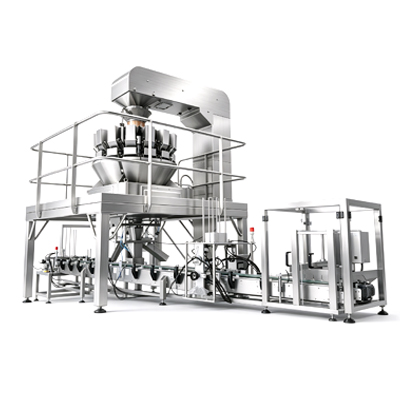
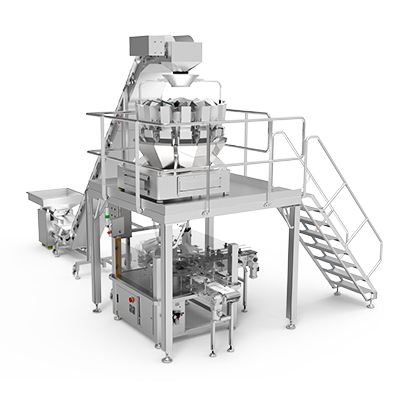
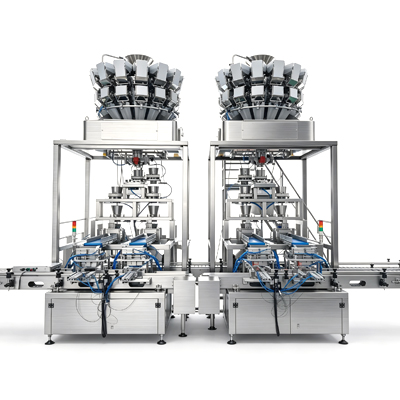
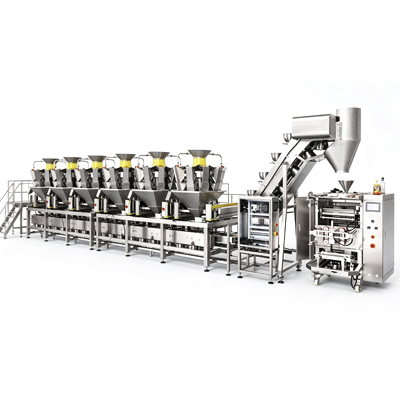
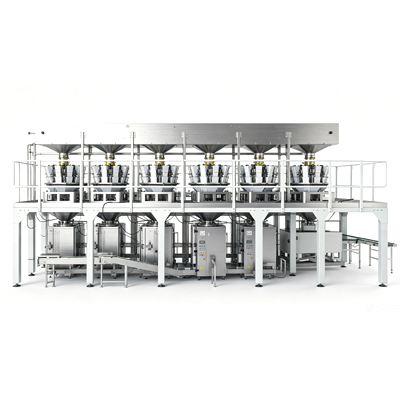
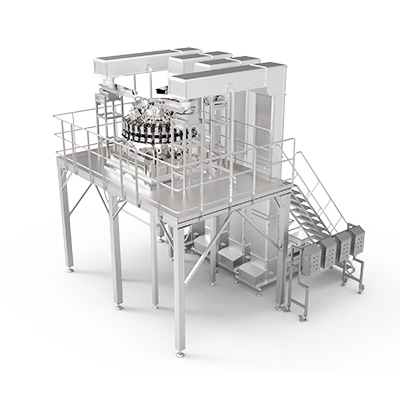
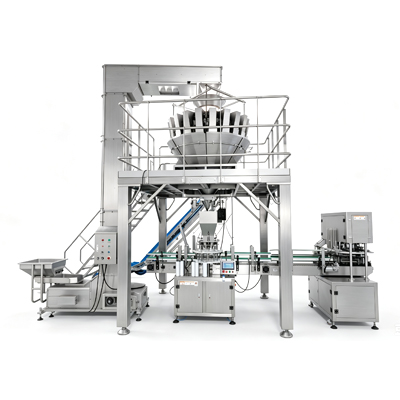
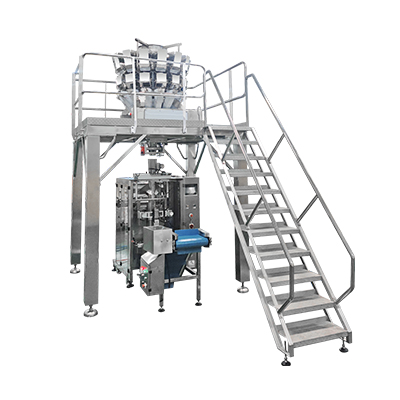
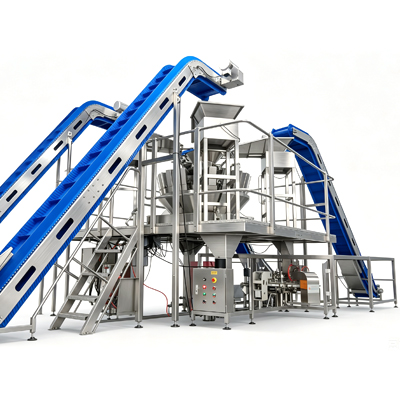
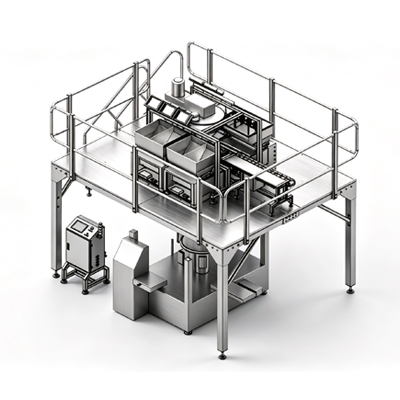
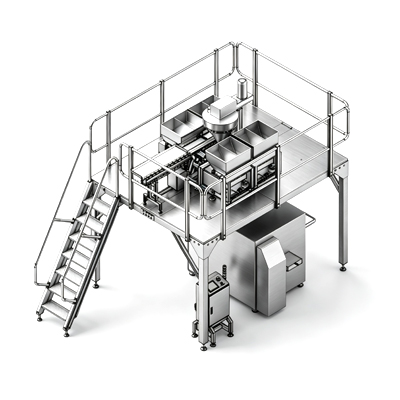
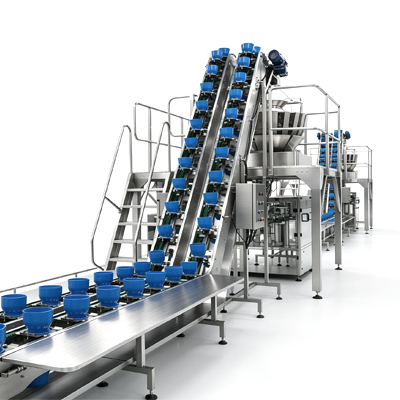
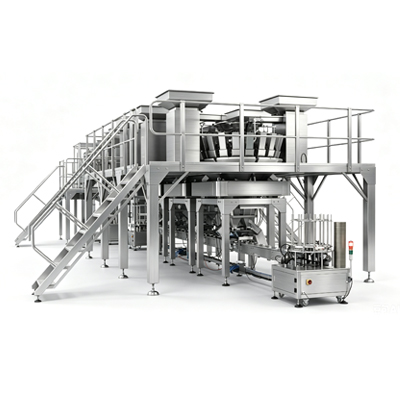
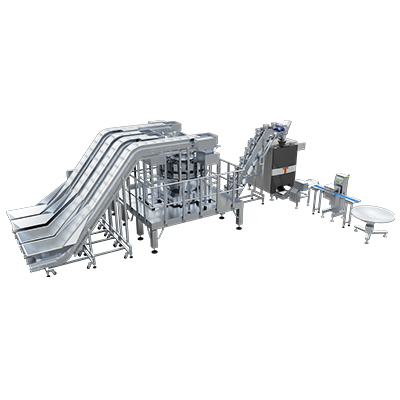
For fresh produce processors, bulk food factories and hardware suppliers, breathable mesh packaging has become the standard solution for bulk solid goods, thanks to its air circulation, lightweight design and shelf-display friendliness. A high-performance mesh bag packaging machine not only replaces manual bagging and tying, but also standardizes packaging quality and cuts long-term labor costs.
However, net bag packing machines vary widely in automation grade, frame structure and material compatibility. Choosing the wrong type often leads to low efficiency, high material damage or wasted investment. This guide systematically classifies all mainstream mesh bag packaging equipment, compares core differences across categories, and provides actionable selection frameworks and industry-specific solutions to help you find the best fit for your production line.
1. What Is a Mesh Bag Packaging Machine?
Core Functions & Industry Value
A mesh bag packaging machine is specialized packaging equipment designed for mesh/net packaging materials. It completes metering, bag filling, closing/ sealing and optional labeling in semi or fully automatic mode, replacing manual bag loading and hand-tying operations. It is widely used for bulk solid materials that require breathable storage and visual display.
Core Functions
The core value of a mesh bag packaging machine lies in accurate dosing and reliable sealing:
Metering function
Paired with linear weighers, multihead weighers or counting modules, it achieves precise weight/count filling with an error as low as ±0.5%.
Bag forming function
The mesh former and forming tube unroll and open the mesh roll, working with the feeding chute to fill materials smoothly.
Sealing/Closing function
Supports clip closing, thread sewing and ultrasonic sealing to ensure tight, drop-proof bag mouths.
Expandable functions
Compatible with labelers, inkjet printers and conveyors for full-process automation of product identification and downstream handling.
Key Industry Benefits
Compared with manual packaging, mesh bag packaging machines deliver three core business values:
1.Efficiency boost: One machine replaces 3–8 skilled packaging workers, drastically reducing labor costs and hiring dependency.
2.Standardized quality: Consistent weight, sealing strength and packaging appearance improve shelf display uniformity and brand credibility.
3.Lower waste: Precision metering reduces material loss, and standardized sealing prevents spillage during transportation, cutting circulation damage.
Today, mesh bag packaging machines are widely adopted across fresh produce, snack food, seafood, hardware and agricultural supply industries, becoming a basic upgrade for bulk material packaging automation.
2. By Automation Level:
Semi-Automatic vs. Fully Automatic Mesh Bag Packaging Machines
The first and most critical classification is by automation degree: semi-automatic and fully automatic net bag packing machines. They differ greatly in operation mode, output, cost and applicable scenarios.
Semi-Automatic Mesh Bag Packaging Machines
Semi-automatic models work in a human-machine collaborative mode: core metering and closing are done by the machine, while bag loading, feeding and start-up require manual assistance.
Workflow: Manually fit the mesh bag onto the discharge nozzle → feed materials/start metering → machine completes weighing and filling automatically → machine closes the bag → worker removes the finished product.
Key features: Compact footprint (under 1㎡), flexible and mobile; easy to operate with 10-minute training for ordinary staff; low upfront investment, ideal for small-batch, multi-SKU flexible production.
Output range: Typically 10–20 bags per minute, with a daily output of 3,000–5,000 bags, depending on operator proficiency.
Best for: Small and medium processing plants, community sorting centers, in-store packaging in supermarkets, and small-batch multi-product produce/food distribution.
Fully Automatic Net Bag Packing Machines
Fully automatic models achieve unmanned operation from feeding, metering, bag forming, closing to output. Workers only need to refill mesh rolls and handle occasional exceptions.
Workflow: Elevator feeds materials automatically → metering system weighs precisely → machine pulls, forms and fills mesh automatically → automatic closing/labeling → finished products conveyed to next process.
Key features: Supports 24/7 continuous production with stable output; high-end models feature dual forming tubes for non-stop roll change; can be integrated into full automatic production lines.
Output range: Standard models reach 25–40 bags per minute; high-speed lines exceed 60 bags per minute, with daily output over 30,000 bags per line.
Best for: Large produce processing bases, food factories, large-scale sorting centers, and mass production scenarios with stable orders.
Core Difference Comparison
Dimension
Semi-Automatic Mesh Bag Machine
Fully Automatic Mesh Bag Machine
Labor requirement
1 dedicated operator, full manual-machine collaboration
1 worker monitors 2–3 machines, only for material refill and inspection
Packing speed
10–20 bags/min, fluctuates with operator speed
25–60 bags/min, stable and controllable
Upfront cost
Low, 30%–50% of fully automatic models
High, higher investment for complete production lines
Footprint
Compact, mobile deployment
Large, requires fixed installation space
Changeover flexibility
Fast specification and material change, high flexibility
Parameter adjustment needed for changeover, best for single-category mass production
3. By Frame Structure:
Inclined, Vertical, Horizontal & Continuous Roll Sewing Machines
The second core classification is by frame structure and feeding method. Different structures directly determine material drop height, packing speed and material compatibility.
Inclined Mesh Bag Packaging Machines
Also called inclined-tube mesh baggers, these machines feature an inclined forming tube and feeding channel, and are the most widely used structure in the produce industry.
Working principle: The mesh roll unfolds along the inclined forming tube; materials slide down the slope into the bag with reduced impact, then are clipped and cut at the bottom.
Key features: Low drop impact protects material skin from bruising; simple and stable structure with low maintenance cost; high speed, up to 40 bags/min for standard models.
Suitable materials: Round, rollable produce such as oranges, tangerines, potatoes, onions and lemons, balancing efficiency and product protection.
Vertical Net Bag Packaging Machines
Vertical models adopt a vertical downward feeding channel and rely on gravity for filling, the classic structure for traditional mesh packaging.
Working principle: The forming tube is arranged vertically; the mesh bag is opened from top to bottom; materials fall directly into the bag from the top, then the bottom is closed and cut.
Key features: Compact structure saves horizontal space; smooth feeding with low jamming risk; ideal for dense, non-fragile granular materials.
Suitable materials: Garlic, ginger, chestnuts, nuts and small hardware parts — hard items that tolerate minor impact, especially for small-quantity fixed-weight packaging.
Horizontal Mesh Bag Packaging Machines
Horizontal machines use horizontal feeding and bagging, with materials transported at low drop and low impact — the top choice for fragile materials.
Working principle: Materials are fed into horizontally placed mesh bags via horizontal trays or conveyor chains, then sealed and closed. There is almost no vertical drop during the whole process.
Key features: Zero material drop, maximum protection for skin and integrity; tight packaging with neat finished appearance; some tray-type models reach 50 bags/min.
Suitable materials: High-value fragile fruits such as peaches, mangoes, jujubes, kiwis and apples; also suitable for shaped food like marinated eggs and sausages.
Continuous Roll Mesh Bag Sewing Machines
Designed for pre-made continuous roll mesh bags, this type operates in continuous bag feeding, filling and sewing mode, especially for large-size, heavy-weight mesh packaging.
Working principle: The continuous roll mesh is pulled steadily by the bag feeding mechanism and aligned with the filling station one by one. After filling, the bag mouth is stitched closed by a sewing head, then cut into individual finished bags.
Key features: Compatible with large-size, high-load mesh bags from 1kg to 25kg; sewn closure has high strength for heavy load stacking and transportation; lower consumable cost for mass production.
Suitable materials: Bulk agricultural products such as potatoes, onions, sweet potatoes and cabbage in large packages; also for bulk hardware and plastic parts.
4. Mainstream Mesh Bag Packaging Machine Models:
Materials & Use Cases
Combining automation level and structure, the six most mainstream models on the market each have clear material and scenario fit:
Machine Type
Automation Level
Bag Weight Range
Typical Speed
Core Materials
Typical Scenarios
Benchtop Semi-Automatic Mesh Bagger
Semi-automatic
200g–5kg
10–15 bags/min
Garlic, ginger, marinated eggs, small citrus
Stores, small sorting points, multi-SKU small-batch processing
Inclined Fully Automatic Mesh Packer
Fully automatic
450g–5kg
30–40 bags/min
Oranges, potatoes, onions, citrus, shellfish
Produce processing plants, origin sorting centers, fresh supply chains
Horizontal Tray Mesh Bag Machine
Fully automatic
500g–3kg
30–50 bags/min
Peaches, mangoes, apples, kiwis
Premium fruit packaging, gift box fresh produce sorting
Vertical Mesh Bag Packaging Machine
Fully automatic
100g–3kg
25–35 bags/min
Chestnuts, nuts, hardware parts, marinated food
Food factories, hardware parts packaging, snack food production
Supermarket supply, premium gift produce, branded agricultural products
5. 5 Core Metrics for Choosing the Right Mesh Bag Packaging Machine
With so many machine types available, evaluate the following 5 core indicators to avoid performance redundancy or insufficient capacity.
① Output Matching
The rated speed should match your actual production demand, with 15%–20% capacity redundancy for order fluctuations. For daily output below 5,000 bags, semi-automatic models are sufficient; for daily output above 10,000 bags, prioritize fully automatic models. Note that the advertised speed is the ideal maximum; actual output is usually 70%–85% of the nominal value, affected by material properties and roll change frequency.
② Material Compatibility
Choose the structure according to the physical properties of your materials:
Fragile, high-value produce → horizontal/tray structure for low-drop protection
Round, durable bulk produce → inclined structure for balanced efficiency and cost
Heavy, large-size packaging → continuous roll sewing type for higher load and sealing strength
③ Packaging Accuracy Requirement
Packaging accuracy directly affects material waste and net content compliance. For high-value materials, choose models equipped with high-precision metering modules (such as multihead weighers) with accuracy up to ±0.1g; for ordinary bulk materials, linear weighers or volumetric metering can control equipment cost.
④ Flexible Production Demand
If your business has many product categories and small batch sizes, requiring frequent packaging specification and material changes, prioritize easy-to-operate, fast-changeover semi-automatic machines, or fully automatic models with quick mold change. For single-category, stable orders, dedicated high-speed fully automatic models maximize production efficiency.
⑤ Long-Term Operation & Maintenance Cost
In addition to the initial purchase cost, evaluate consumable cost, wearing part prices, after-sales response speed and maintenance difficulty. Stainless steel bodies offer better corrosion resistance for humid food and fresh produce environments; modular design simplifies troubleshooting and part replacement, reducing downtime loss.
6. Industry-Specific Selection Guide:
Best Machine Structure for Each Category
Different industries have distinct core demands for mesh packaging, corresponding to different optimal equipment structures.
Bulk storable produce (potatoes, onions, carrots): Prioritize inclined fully automatic mesh bag packaging production lines, paired with elevators and sorting machines for integrated sorting-weighing-packaging. With output up to 40 bags/min, they greatly replace manual sorting and packaging costs.
Premium fragile fruits (peaches, mangoes, strawberries): Choose horizontal tray mesh bag packaging machines with automatic labeling. Zero-drop packaging ensures fruit integrity, and uniform labeling improves shelf display quality for 1–1.5kg supermarket specifications.
Community group buying / front warehouse scenarios: For fragmented orders and diverse specifications, recommend semi-automatic mesh bag packaging machines. They have a small footprint and flexible deployment, and can adjust packaging categories and specifications dynamically without fixed production line setup.
Nuts, roasted seeds and snacks: Recommend vertical fully automatic mesh bag packaging machines + multihead weighers. The whole machine is made of 304 stainless steel, meeting food contact safety standards; multihead weighers deliver high precision and reduce metering loss of high-value materials.
Cooked food like marinated eggs and bean products: Recommend horizontal mesh bag packaging machines. Horizontal conveying avoids bumping and deformation; tight packaging prevents scattering; can be equipped with disinfection and spraying devices for food workshop hygiene requirements.
Seafood and shellfish: Recommend waterproof inclined mesh bag packaging machines. The whole machine is waterproof and corrosion-resistant for direct washdown; with drainage structure design to reduce water impact on sealing quality.
Hardware & Plastics Industry
Core demands: high load capacity, firm sealing, wear resistance and durability.
Screws, nuts, small hardware parts: Recommend counting vertical mesh bag packaging machines. Adopting photoelectric counting or weighing counting scheme, it controls quantity per bag precisely, replacing manual counting with 5x higher efficiency.
Plastic pellets, injection parts: Recommend continuous roll mesh bag sewing machines. Compatible with 10–25kg large bags; sewn closure has high strength for stacking and long-distance transportation; optional dust removal device reduces dust impact.
Irregular hardware parts: Customized hoppers and conveying structures are available to avoid jamming and mesh scratching, with directional feeding optimization for special-shaped workpieces.
7. Supporting Accessories:
Feeding Systems, Mesh Formers & Production Software
The actual performance of a mesh bag packaging machine largely depends on the compatibility of supporting accessories. Mainstream accessories fall into three categories, available for optional upgrade.
Feeding & Loading Systems
Belt elevator: The most universal feeding equipment, conveying materials from the ground to the machine inlet, suitable for most granular and block materials.
Vibratory feeding bowl: For small, jam-prone materials, it feeds evenly through vibration to avoid blockage, suitable for small hardware parts and nuts.
Storage bin + screw feeder: For poor-flowability materials, it achieves uniform and quantitative feeding to ensure metering stability.
Packaging Execution Accessories
Specialized mesh formers: Mesh bags of different sizes and materials require corresponding mesh formers for quick changeover to fit multi-specification packaging; high-quality formers adopt smooth rounded design to reduce mesh friction damage.
Closing/sealing modules: Includes clip closing, thread sewing and ultrasonic sealing options, replaceable according to bag type and load requirements.
Tag/inkjet unit: Automatically attaches product tags at the closure, or prints production date, batch number and traceability code on the mesh bag to meet retail and compliance requirements.
Intelligent Management Modules
Checkweigher with rejection system: Online weight inspection for each bag, automatically rejecting unqualified products to ensure net content compliance.
Production data acquisition system: Real-time statistics of output, pass rate, downtime and other data, generating production reports to assist production management.
MES interface: Supports connection to factory Manufacturing Execution System for production data interconnection, suitable for digital workshop construction.
8. 3-Step Selection Method: Match Machine to Output, Budget & Product
To narrow down options quickly from diverse machine types, follow this 3-step selection framework to find the optimal solution.
Step 1: Define Automation Level by Output
First clarify your daily packaging volume and 1–2 year capacity plan:
Daily output 5,000–15,000 bags, multiple product categories → 1–2 medium-speed fully automatic machines, or a mix of semi-automatic and fully automatic
Daily output > 15,000 bags, single-category mass production → directly adopt high-speed fully automatic production lines with upstream and downstream conveying equipment
Step 2: Determine Structure by Product Properties
Choose the frame structure according to material physical form, bag weight and fragility:
Within 5kg per bag, round and durable produce → inclined structure
Within 5kg per bag, high-value fragile produce → horizontal tray structure
Within 3kg per bag, granules/hardware parts → vertical structure
Above 5kg per bag, bulk material large packaging → continuous roll sewing structure
Step 3: Lock Configuration by Budget & Long-Term Demand
After confirming the machine category, select the configuration level according to budget:
Basic version: Meets core metering, bagging and closing functions, suitable for budget-tight, single-demand enterprises
Standard version: Adds automatic labeling, fault self-diagnosis and parameter memory, suitable for regular production
High-end version: Equipped with dual-tube non-stop roll change, online checkweighing and data management system, suitable for large-scale digital factories
After the three-step screening, you can further request material packaging tests from the equipment manufacturer to verify actual packaging effect and stability before finalizing the purchase plan.
9. Application-Specific Solutions for Produce, Food & Hardware Industries
① Classification Logic of Mesh Bag Packaging Machines by Application Scenario
The classification of mesh bag packaging machines is essentially "scenario demand drives structure design": automation level corresponds to production scale, frame structure corresponds to material properties, and accessory configuration corresponds to industry-specific requirements. When selecting, there is no need to blindly pursue high configuration; instead, take "scene fit, demand satisfaction, optimal cost" as the core principle, match core demands first, then consider extended functions.
From the application scenario dimension, mesh bag packaging machines fall into three major application camps: fresh produce, bulk food and industrial hardware, each corresponding to different mainstream models and optimization directions.
② Fresh Produce Industry: Suitable Machine Types & Packaging Solutions
Fresh produce is the largest application field for mesh bag packaging machines, with different equipment solutions for different circulation links:
Origin bulk sorting scenarios: For storable produce like potatoes, onions and citrus, we recommend inclined fully automatic mesh bag packaging production lines paired with elevators and sorting machines for integrated sorting-weighing-packaging. A single line can reach 40 bags per minute, greatly replacing manual sorting and packaging costs.
Premium supermarket distribution scenarios: For premium fruits and cleaned vegetables, we recommend horizontal mesh bag packaging machines + automatic labeling. Low-drop packaging ensures fruit integrity, and uniform tags improve terminal display texture, fitting the common 1–1.5kg supermarket specification.
Community group buying / front warehouse scenarios: For fragmented orders and diverse specifications, we recommend semi-automatic mesh bag packaging machines with small footprint and flexible deployment.
③ Bulk Food Industry: Selection Points & Machine Recommendations
The bulk food industry has higher requirements for hygiene standards and metering accuracy, so material and metering configuration are key selection points:
Nuts and snack food: Recommend vertical fully automatic mesh bag packaging machines + multihead weighers with 304 stainless steel body for food contact safety; high-precision metering reduces loss of high-value materials.
Cooked food like marinated eggs: Recommend horizontal mesh bag packaging machines with horizontal conveying to avoid bumping and deformation, and tight packaging that is not easy to scatter.
Seafood and shellfish: Recommend waterproof inclined mesh bag packaging machines with waterproof and anti-corrosion treatment for direct washdown, and drainage structure to reduce water impact on sealing.
The hardware and plastics industry focuses on load capacity, counting accuracy and durability, with industrial-grade configuration preferred:
Screws, nuts, small hardware: Recommend counting vertical mesh bag packaging machines with photoelectric or weighing counting to precisely control quantity per bag, replacing manual counting with 5x higher efficiency.
Plastic pellets, injection parts: Recommend continuous roll mesh bag sewing machines compatible with 10–25kg large bags, with high-strength sewn closure for stacking and long-distance transportation; optional dust removal device.
Irregular hardware parts: Customized hoppers and conveying structures are available to avoid jamming and mesh scratching.
⑤ Special Material Scenarios: Customized Mesh Bag Machine Solutions
For materials with special properties that standard models cannot fully adapt to, customized modification can achieve optimal packaging results:
Fragile, pressure-sensitive materials: Custom tray-type horizontal structure with buffer feeding device for zero-impact conveying; optional inflatable buffer mesh bags for further protection.
Fine, dusty materials: Sealed feeding structure + dust removal interface to reduce dust overflow during packaging and protect workshop environment and equipment service life.
Oversized/ultra-small specifications: Custom forming tubes and mesh formers to fit ultra-small mesh bags (under 100g) or oversized mesh bags (50kg grade) for special packaging specifications.
Explosion-proof, anti-corrosion scenarios: Full-machine customization with explosion-proof motors and anti-corrosion materials to meet safety compliance requirements for special workshops.
Final Summary
Selecting a mesh bag packaging machine is essentially a balance of output, material properties and cost. Enterprises can first clarify their core demands, then screen layer by layer by automation level, frame structure and supporting configuration, and combine material test results to finalize a highly adaptable equipment solution.
As packaging technology evolves, intelligence, modularity and flexibility are becoming the development trends of mesh bag packaging machines. It is advisable to reserve upgrade space during selection to adapt to future production needs.
Looking for a custom mesh bag packaging solution tailored to your materials and output?
Contact our engineering team today for a free material testing report and detailed quotation.
Automated mesh bagging extends produce shelf life by providing vital airflow. Upgrading your line slashes labor costs, stops product giveaway, and maximizes daily output.
Dust-controlled powder fillers use vacuum extraction and servo-driven augers to package fine materials. These automated systems prevent waste, ensure safety, and maximize ROI.
Horizontal packaging machines use lateral movement to safely package solids, powders, and liquids. These systems ensure leak-proof seals, cut labor costs, and maximize your ROI.
It is a high-tech enterprise specializing in the R&D, design, and independent manufacturing of packaging, conveying, weight detection, weighing, and filling equipment.