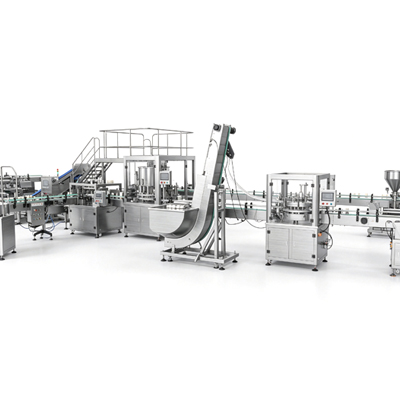
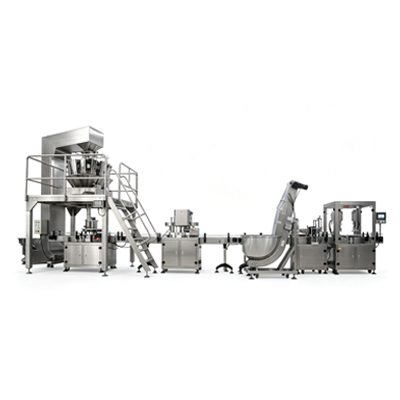
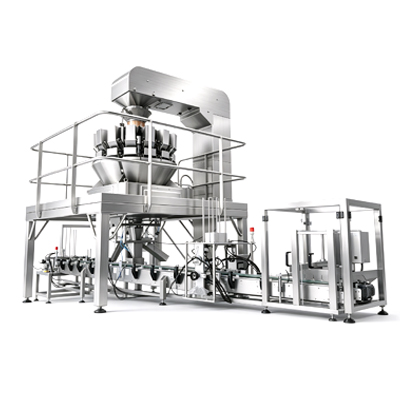
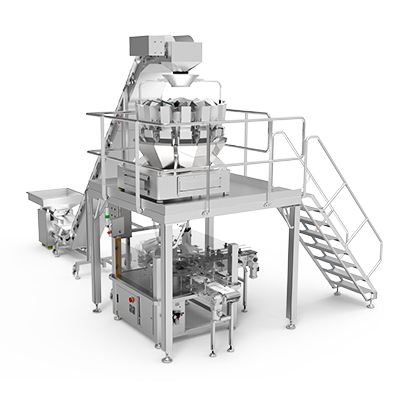
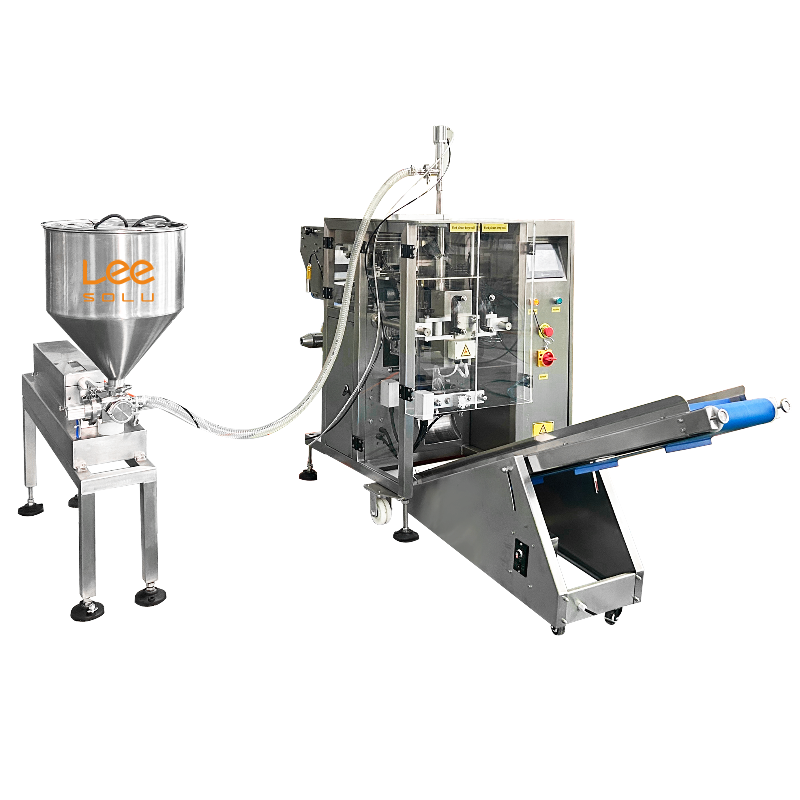
High-mix manufacturing hides a massive profitability drain right on the production floor. Equipment downtime caused by manual, labor-intensive product and container changeovers eats into operational hours. Facilities often over-rely on veteran operators and their tribal knowledge to dial in settings, creating a severe bottleneck. You face constant tension between consumer demand for diverse product SKUs—different flavors, viscosities, and packaging sizes—and the harsh operational reality of cross-contamination risks and wasted labor hours. Modern engineering shifts this dynamic entirely. A well-designed Liquid Packing Machine turns changeover from a manual liability into an automated, predictable process. Instead of wrestling with wrenches and hex keys, operators use digital recipes and quick-release components. We will break down the mechanical realities and specific features you must evaluate to achieve fast, repeatable product changeovers on the floor.
Key Takeaways
Automation Reduces Downtime: Programmable Logic Controllers (PLCs) with recipe management can reduce changeover times from hours to minutes by automating fill volumes, pump speeds, and flow rates.
Mechanical Modularity is Non-Negotiable: Tool-less adjustments and quick-release components are baseline requirements for facilities handling multiple container shapes, from rigid bottles to flexible sachets.
Sanitation Speed Dictates Product Flexibility: Integrated Clean-in-Place (CIP) and Sterilize-in-Place (SIP) systems are critical for safely switching between distinct liquid formulations without manual teardowns.
ROI is Tied to OEE: The higher initial capital expenditure for rapid-changeover features is typically offset by significant gains in Overall Equipment Effectiveness (OEE), consistent production scales, and reduced labor costs.
The Mechanics of Changeover in a Liquid Packing Machine
Defining a fast changeover requires looking at hard industry benchmarks. Legacy mechanical systems often demand two or more hours for a complete teardown and recalibration. Modern automated systems target sub-15-minute changeovers. Achieving this speed requires understanding the fundamental difference between a product changeover and a format changeover.
Changeover Type
Definition
Primary Challenge
Product Changeover
Swapping the actual liquid formulation being filled.
Flushing, cleaning, and validating the fluid path to prevent cross-contamination.
Format Changeover
Swapping the physical container size, shape, or closure type.
Mechanical adjustments to guide rails, star wheels, nozzles, and capping mechanisms.
Applying Single-Minute Exchange of Dies (SMED) principles to liquid filling requires separating internal tasks from external tasks. Internal tasks require the machine to be stopped, such as swapping fill nozzles or adjusting guide rails. External tasks can be performed while the machine is running, such as staging the next batch of liquid or prepping the new bottle format on a secondary unscrambler. Fast changeovers minimize internal tasks and shift as much work as possible to external preparation.
Shifting from free-flowing liquids like water or spirits to high-viscosity products like syrups, gels, or pastes directly impacts pump selection. Viscous liquids require robust positive displacement pumps, such as rotary lobe or gear pumps. These pumps take longer to clean if not designed for rapid sanitation. You must also account for the mechanical realities of adjusting guide rails, star wheels, and capping mechanisms for different container profiles. A square bottle handles much differently on a conveyor than a round, unstable vial. When running a 500ml round PET bottle followed by a 250ml square glass bottle, the entire material handling path must adapt.
Maintaining flow rate consistency across different production scales presents another engineering hurdle. Switching between small-batch artisan runs and high-volume continuous production requires precise control. The system must maintain consistent flow rates and fill accuracy regardless of the batch size. Servo-driven pumps excel here, providing exact volumetric control without manual tweaking. The servo motor receives continuous feedback from the PLC, adjusting the pump rotation speed in milliseconds to account for changes in fluid head pressure or temperature-induced viscosity shifts.
Production managers need baseline metrics to evaluate changeover efficiency. Success criteria for high-mix production include:
Changeover Time: Track the exact minutes from the last good bottle of SKU A to the first good bottle of SKU B.
Scrap Reduction: Measure the volume of wasted liquid and the number of damaged containers during the restart phase.
First-Pass Yield: Ensure the very first bottle off the line after a switch meets quality standards without requiring rework.
Operator Independence: Measure how easily a junior operator can perform the changeover without calling maintenance technicians for support.
Ramp-Up Time: Track how long it takes the machine to reach its nominal steady-state operating speed after a format change.
Core Features Enabling Rapid Changeovers in an Automatic Liquid Filling Machine
Tool-Free Adjustment Mechanisms
Eliminating hand tools is the first step toward rapid changeovers. Tool-less change parts utilize hand cranks equipped with digital readouts, snap-in guide rails, and color-coded spacers. These components allow operators to make precise, repeatable adjustments using only their hands. The engineering behind these mechanisms focuses on locking pins, quick-release clamps, and dovetail slides rather than threaded bolts.
Removing wrenches and hex keys from the process reduces operator error. It standardizes the physical changeover process across different shifts. A day-shift operator and a night-shift operator will set the machine up identically. This drastically lowers the training burden compared to legacy manual adjustments, where operators rely on feel and visual estimation to align fill heads. Digital counters on adjustment spindles provide a hard numerical value for every setting. If the recipe calls for a rail width of 45.5mm, the operator simply turns the crank until the counter displays 45.5.
Clean-in-Place (CIP) and Sterilize-in-Place (SIP) Integration
Automated CIP and SIP systems flush, sanitize, and dry fluid paths without requiring the disassembly of valves, hoses, and nozzles. An automatic liquid filling machine equipped with CIP capabilities routes cleaning agents and rinse water through the exact path the product takes. This guarantees thorough sanitation in a fraction of the time a manual teardown requires.
Sanitary design accelerates the cleaning validation process. Components manufactured from 316L stainless steel feature crevice-free welding and tri-clamp connections. These smooth surfaces prevent product build-up and bacterial growth. When the fluid path lacks dead legs and sharp corners, the CIP cycle completes faster. A typical automated CIP sequence includes a pre-rinse to remove bulk soils, a caustic wash to break down fats and proteins, an intermediate rinse, an acid wash to neutralize residues, and a final sanitizing rinse. Automating this sequence ensures the correct flow velocity—typically above 1.5 meters per second—is maintained to create the turbulent flow necessary for mechanical scrubbing inside the pipes.
Programmable Logic Controllers (PLC) and Recipe Management
Human-Machine Interface (HMI) touchscreens store pre-configured recipes for specific liquid and container combinations. The PLC acts as the brain of the operation. When an operator selects a recipe, the system automatically adjusts servo-driven fill heads, pump speeds, and conveyor timing. This digital memory eliminates the trial-and-error calibration that plagues older equipment.
Recipe management ensures consistent flow rates and fill accuracy. Because the parameters are digitally locked in, the machine performs identically every time you run that specific SKU. You remove human calibration errors entirely. The PLC coordinates the entire sequence, ensuring the nozzles dive to the correct depth and the pumps deliver the exact volume required. Advanced systems even profile the fill cycle, starting slow to prevent splashing, accelerating during the bulk fill, and decelerating at the end to ensure a clean cutoff without dripping.
Quick-Release Nozzles and Modular Pump Systems
Modular pump carts and quick-release fill nozzles allow operators to swap out the entire fluid path in minutes. Instead of cleaning a pump in place, you simply disconnect it and roll a clean, pre-sanitized pump cart into position. This modularity keeps the main filling line running while the dirty pump is cleaned offline in a dedicated washdown area.
Dedicating specific pump modules to specific product families offers massive time savings. You can assign one pump cart exclusively to allergen-containing products and another to non-allergens. This strategy bypasses lengthy, highly scrutinized cleaning protocols entirely. You eliminate the risk of cross-contamination by physically separating the fluid paths. Quick-disconnect fittings, such as sanitary tri-clamps, allow operators to break and make fluid connections in seconds without tools.
Evaluating a Liquid Filling Packaging Machine for Your Production Line
Cross-Contamination Risks and Sanitary Compliance
Assessing a machine's compliance with FDA, cGMP, or 3-A sanitary standards is mandatory during rapid changeovers. You must verify that the equipment design supports thorough cleaning. Look for self-draining fluid paths, sanitary welds, and FDA-approved elastomers. The machine must allow for aggressive chemical washdowns without degrading the seals or internal components.
Validation processes ensure no flavor carryover or active ingredient cross-contamination occurs when minimizing cleaning times. You must swab and test the fluid path after a CIP cycle to prove the system is clean. A well-designed liquid filling packaging machine makes this validation straightforward. If the machine requires manual scrubbing to pass a swab test, your changeover times will suffer. Facilities often use riboflavin testing during commissioning to visually verify that the CIP spray balls provide complete coverage inside the filler bowl and fluid pathways.
Scalability and Future-Proofing for New Product Lines
Evaluating a machine's capacity to handle future, unforeseen SKUs ensures the equipment supports your products now and into the future. You need a system with a wide fill range. A machine that only fills 50ml to 100ml bottles limits your growth. Look for equipment capable of handling diverse viscosities and broader volume ranges through simple pump or nozzle swaps.
Format scalability introduces significant complexities. Transitioning from traditional rigid bottles to flexible packaging like liquid sachets or stand-up pouches often requires entirely different handling mechanisms. While some highly modular systems can adapt, you must specify these requirements during the purchasing phase. Additionally, assess the availability and lead times of aftermarket change parts from the Original Equipment Manufacturer (OEM). Long lead times for custom star wheels will delay your new product launches.
Footprint and Line Integration Constraints
Modular change parts and pump carts require dedicated storage space near the production line. You must discuss spatial requirements during the facility planning phase. Shadow boards and custom storage racks keep change parts organized and protected from damage. If operators have to walk across the plant to retrieve a guide rail, your changeover time increases.
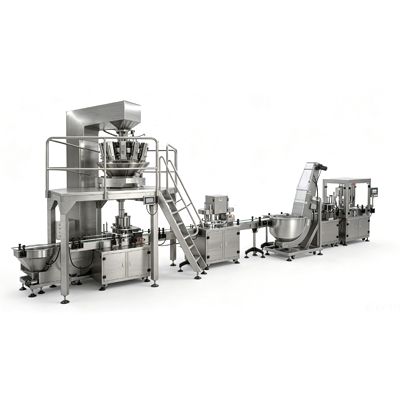
Evaluate how the filling machine communicates with upstream and downstream equipment during a line-wide changeover. The filler must integrate seamlessly with bottle unscramblers, cappers, labelers, and cartoners. A fast filler changeover means nothing if the labeler takes two hours to adjust. The PLC should ideally share recipe data across the entire line, triggering automated adjustments on connected machinery via Ethernet/IP or Profinet communication protocols.
Trade-Offs: Speed vs. Precision vs. Capital Expenditure
Initial Investment vs. Long-Term OEE
A realistic cost-benefit analysis must compare standard mechanical fillers with fully automated, servo-driven systems. Automated machines carry a higher initial capital expenditure. This upfront cost is typically offset by significant gains in Overall Equipment Effectiveness (OEE). You recover lost production hours, reduce scrap, and lower labor costs.
Calculating the payback period requires looking at your specific production data. Track the number of changeovers per week. Multiply that by the hours saved per changeover using an automated system. Factor in your labor rates and the profit margin of the recovered production hours. In high-mix environments, the payback period for rapid-changeover features is often surprisingly short. Increased OEE directly translates to higher throughput and better asset utilization.
Complexity of Maintenance vs. Automation Benefits
Highly automated machines equipped with servo motors, HMIs, and advanced PLCs require a higher tier of technical maintenance expertise. You trade physical labor for technical complexity. Operators no longer need to wrestle with heavy wrenches, but your maintenance team must know how to troubleshoot a faulty servo drive or a sensor alignment issue.
This trade-off requires a shift in your workforce strategy. You reduce operator physical strain and reliance on tribal knowledge. You increase reliance on specialized instrumentation technicians. Ensure your maintenance staff receives adequate training on the specific PLC and servo platforms used in the new equipment. Standardizing on a single automation platform across your facility simplifies this training burden and reduces the required spare parts inventory for electrical components.
Implementation Risks and Mitigation Strategies
Operator Training and Adoption Hurdles
Operators may try to bypass automated settings or improperly install tool-less parts due to a lack of training. If they do not trust the digital recipe, they might attempt manual overrides, leading to inconsistent fills and potential machine damage. Adoption hurdles are common when transitioning from legacy mechanical systems to digital platforms.
Mitigation requires a proactive approach. Mandate comprehensive OEM training for all shifts. Utilize video-based Standard Operating Procedures (SOPs) directly accessible on the HMI screen. Implement user-level access controls to prevent unauthorized personnel from altering baseline recipe parameters. Only maintenance or production managers should have the authority to change the core code or adjust the master recipe setpoints.
Managing Spare Parts for Modular Systems
Lost, damaged, or degraded change parts halt rapid changeovers immediately. Custom star wheels, specialized O-rings, and quick-release clamps are critical path items. If a single color-coded spacer goes missing, the operator cannot complete the format changeover, leaving the line idle.
Implement strict organizational strategies to mitigate this risk. Use shadow boards for all change parts, providing a visual cue when an item is missing. Establish a strict preventative maintenance schedule for seals and gaskets. Maintain a strategic inventory of critical wear items on-site to prevent shipping delays from halting production.
Commissioning and Factory Acceptance Testing (FAT)
Installing a machine that fails to meet promised changeover speeds in your actual facility presents a major operational risk. A machine might perform perfectly with water and standard bottles at the OEM's facility, but struggle with your viscous syrup and custom containers.
Structure the FAT protocol to explicitly include timed, end-to-end changeovers. Use your facility's actual liquids, bottles, and caps during the test. Do not sign off on the equipment until the OEM proves the machine can hit the sub-15-minute changeover target under real-world conditions. This rigorous testing prevents costly surprises during commissioning and ensures the equipment meets your OEE targets from day one.
Conclusion
Audit your current changeover downtime over a two-week period to establish a baseline metric for internal versus external tasks.
Calculate the financial impact of lost production hours and wasted material during these changeovers to justify capital expenditure.
Inventory your current and projected SKUs to define your exact viscosity ranges and container format limitations.
Request a technical consultation or targeted machine demo focusing specifically on timed, tool-less changeover procedures.
FAQ
Q: How long does a standard changeover take on an automatic liquid filling machine?
A: Manual systems often take one to three hours for a complete teardown and recalibration. Automated, tool-less systems can complete the process in 10 to 20 minutes. The exact time depends heavily on the specific cleaning and sanitation requirements of the liquids being swapped.
Q: Can one liquid packing machine handle both thin and viscous liquids?
A: Yes, but it requires specific pump types, such as rotary lobe or gear pumps. The machine must also feature programmable fill speeds to prevent splashing with thin liquids or cavitation with thick liquids, maintaining consistent flow rates across all viscosities.
Q: What is the difference between a product changeover and a format changeover?
A: A product changeover involves switching the actual liquid being filled, which requires thorough cleaning and flushing of the fluid path. A format changeover involves adjusting the physical machinery, like guide rails and star wheels, to accommodate a different bottle, sachet, or container size.
Q: How do Clean-in-Place (CIP) systems reduce changeover times?
A: CIP systems automate the flushing of the fluid path with water and cleaning agents. This eliminates the labor-intensive need for operators to manually dismantle, scrub, and reassemble hoses, valves, and nozzles between product runs.
Q: Do quick changeovers compromise fill accuracy?
A: No. With servo-driven technology and PLC recipe management, accuracy is strictly maintained. The parameters are digitally locked into the system, which removes human calibration errors and ensures consistent, repeatable fills immediately after a changeover.
Q: Can a liquid filling packaging machine switch between rigid bottles and flexible sachets?
A: While some highly modular systems can adapt, transitioning between rigid containers and flexible sachets is highly complex. It often requires dedicated forming and sealing mechanisms. This type of major format changeover must be explicitly specified during the initial purchasing phase.
Q: What container types require the longest changeover times on a liquid filling packaging machine?
A: Uniquely shaped, unstable, or non-freestanding containers take the longest. These formats often require custom pucks to hold them upright, specialized guide rails, or complex handling mechanisms that demand precise, time-consuming mechanical alignment.
Automated mesh bagging extends produce shelf life by providing vital airflow. Upgrading your line slashes labor costs, stops product giveaway, and maximizes daily output.
Dust-controlled powder fillers use vacuum extraction and servo-driven augers to package fine materials. These automated systems prevent waste, ensure safety, and maximize ROI.
Horizontal packaging machines use lateral movement to safely package solids, powders, and liquids. These systems ensure leak-proof seals, cut labor costs, and maximize your ROI.
It is a high-tech enterprise specializing in the R&D, design, and independent manufacturing of packaging, conveying, weight detection, weighing, and filling equipment.